Admission HelpDesk


 Admission HelpDesk


 1800-102-1900
  admissions@jnujaipur.ac.in

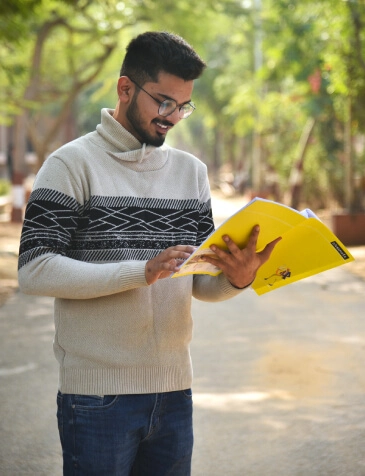
As a B.Tech Biotechnology student at JNU, my journey has been transformative. The comprehensive curriculum and supportive faculty have deepened my understanding of biotechnology.
Ms. Pratika Gupta
B.tech Biotechnology



Jaipur National University, Jaipur is one of the top self-financed private university in Rajasthan sponsored by the Mahima Shiksha Samiti.

If you have an innovative idea, we can show you the way ahead. Be an entrepreneur with the perfect..
Social responsibility takes many forms - from providing affordable/free healthcare...
Their focus is to develop both education and critical skills to help our students excel in life.

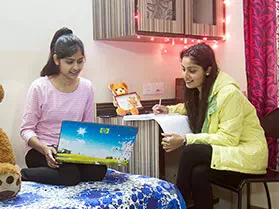

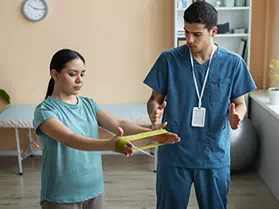


Our mission is to nurture a knowledgeable society through cutting-edge research and education.
With a strong emphasis on both theoretical and practical learning, we offer state-of-the-art facilities and hands-on experience across various disciplines.


Industry Supported
Program

NEP Based
Curriculum

Mandatory Industrial
Internship

Placement
Opportunities

Global
Certification

Hand on
Learning

Global Alumni
Network
New Age Research &
Innovation
Student Exchange
Opportunities

National & International
Academic Collaborations

Actively engaging in hands-on activities, such as industrial visits, for deeper learning beyond traditional classroom instruction.

Encouraging exploration of real-world problems by integrating knowledge from multiple disciplines.

Using empirical research and data to enhance the teaching and learning process.

Collaborating on real-world challenges to develop solutions, fostering critical thinking and practical application of knowledge.
Simulating real-life scenarios to practice skills and behaviors in a dynamic learning environment.
Fostering student engagement through active involvement and collaborative learning.

Teaching systematic approaches for analyzing and solving complex problems efficiently.

Empowering students to take charge of their own learning process, from planning to evaluation.
Analyzing real or hypothetical scenarios to develop problem-solving and decision-making skills.
Renowned teaching Faculty
Programmes to choose from
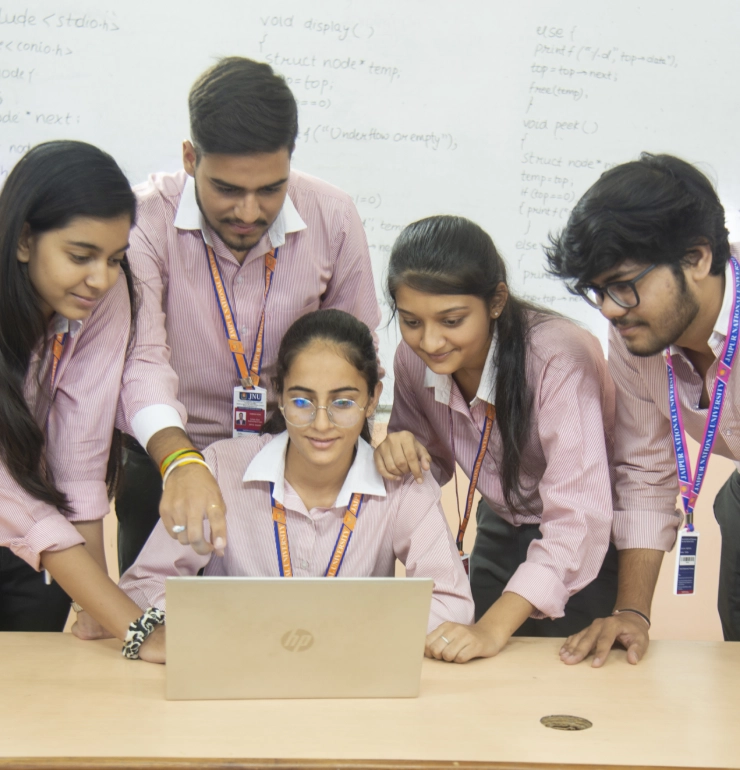
Well equipped with modern computing facilities to support foundational learning in computer science and technology.
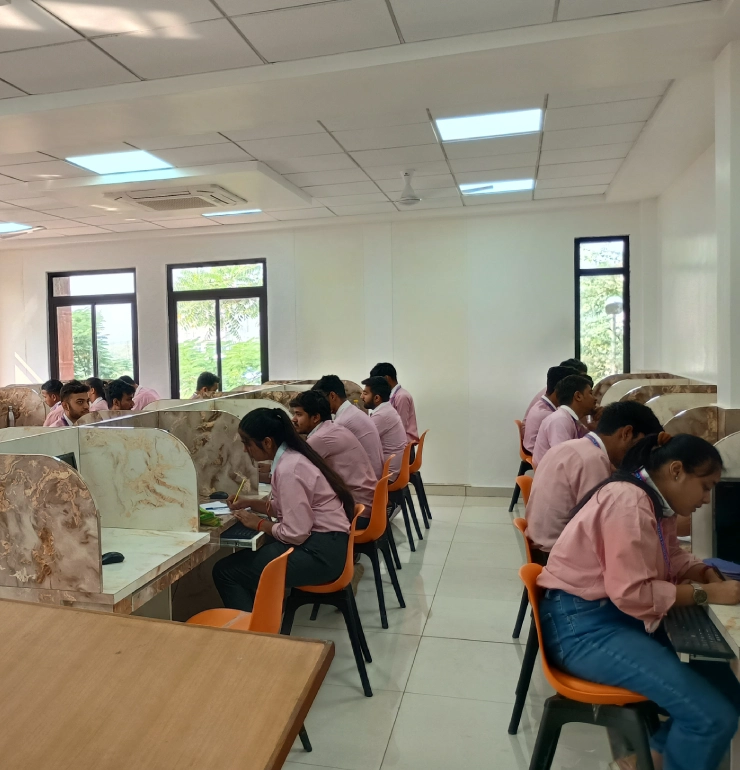
To provide students with a strong foundation in the principlesand techniques of AI & ML as well as hands on experience in applying these technologies to real world problems
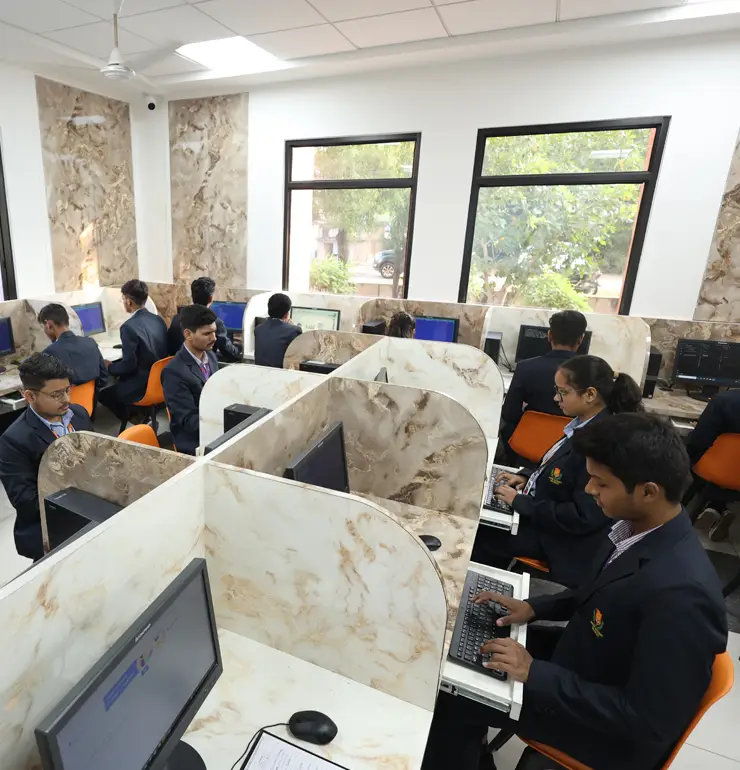
Lab focuses on teaching fundamentalOOPS concepts such as classes, objects, inheritance, polymorphism, and encapsulation throughhands-on coding in C++
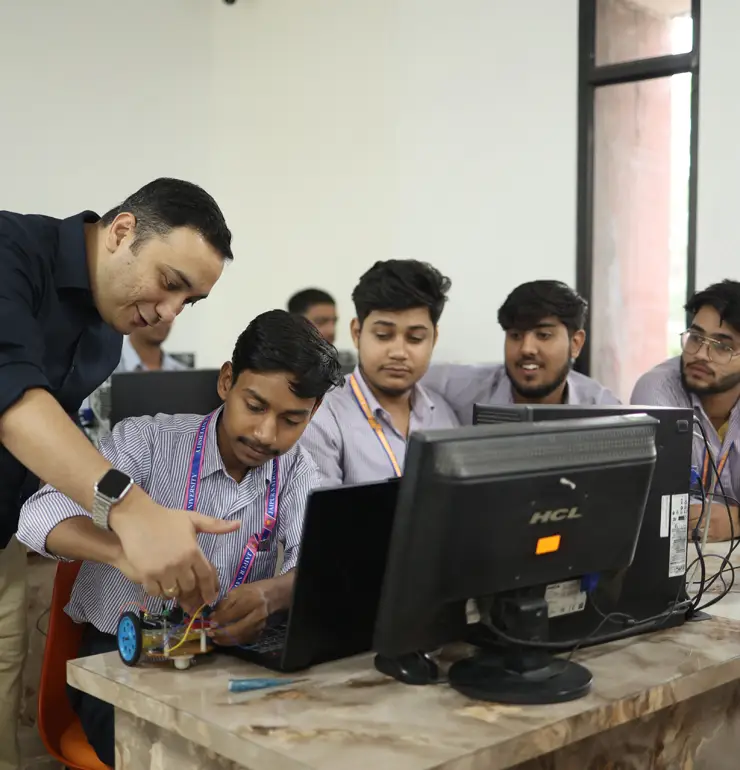
It has a cutting-edge facility dedicated to exploring and advancing emerging technologies through hands-on research and innovation
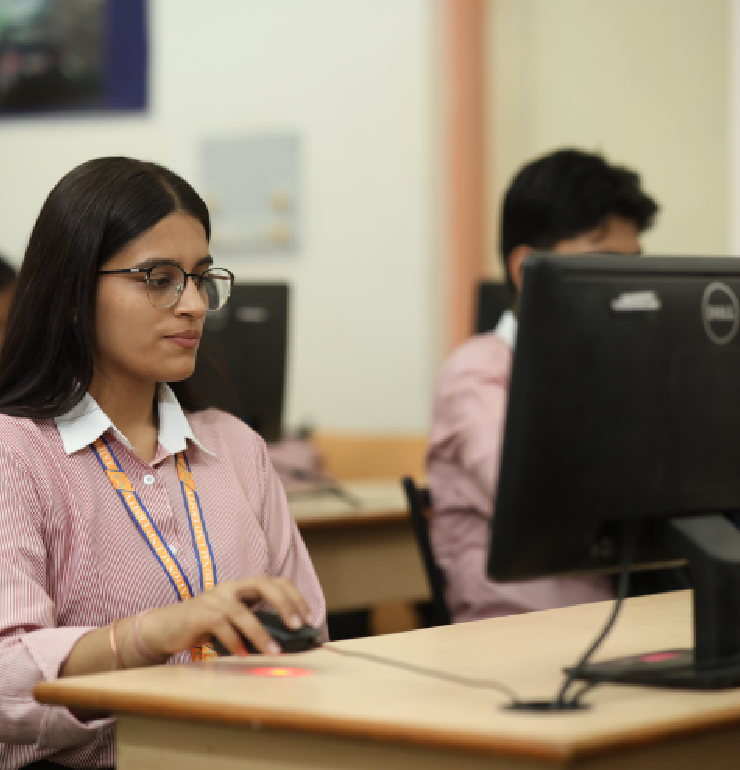
This Lab focuses on developing advanced solutions toprotect digital infrastructures and enhance cyber security in an increasingly connectedworld
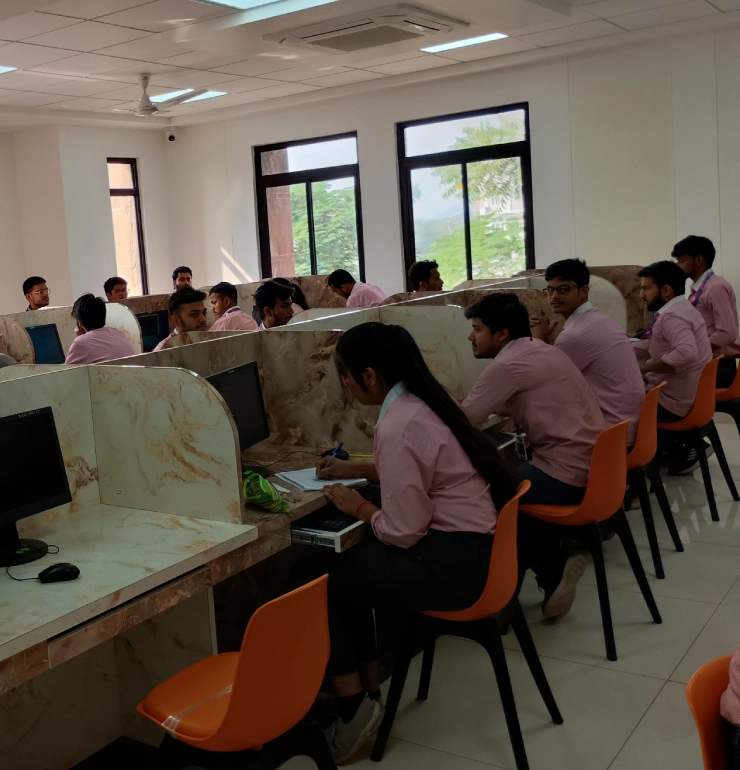
The Data Structure Lab provides hands-on experience in designing andimplementing efficient data structures, fostering problem-solving skills for complexcomputational challenges
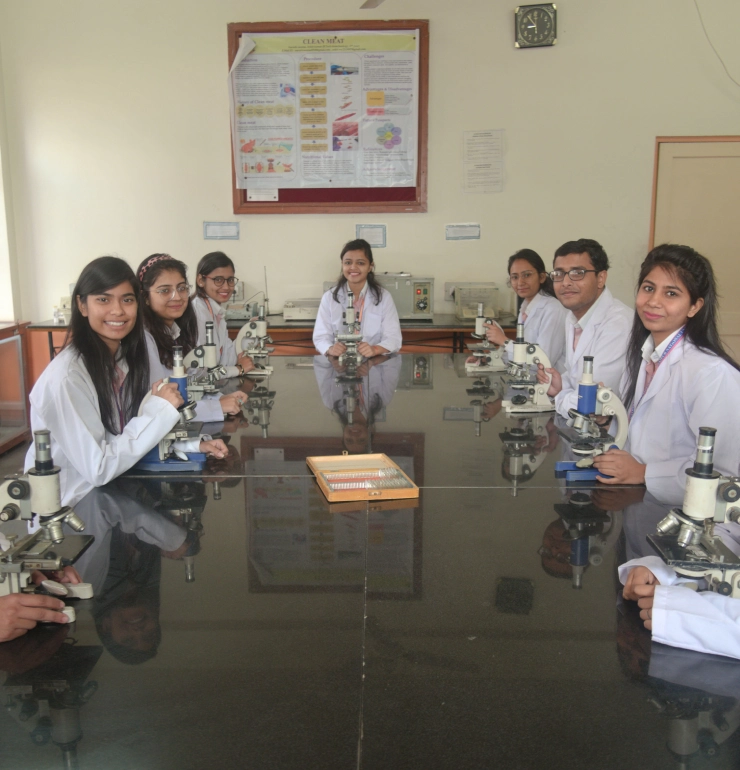
The microbiology laboratory devoted to the culturing, examination, and identification of microorganisms including bacteria, fungi, yeasts, etc. The microbiology laboratory has a crucial role in providing hands-on-training to students in handling and maintaining live cultures of bacteria and fungi.
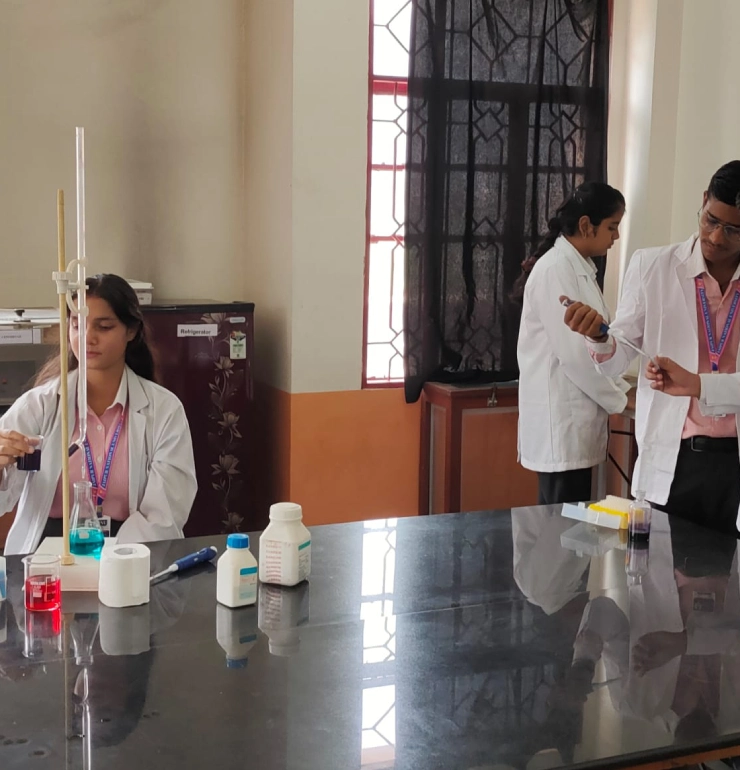
In Biochemistry lab, students perform various quantitative and qualitative test’s for estimation and identification of biomolecules includingcarbohydrates, proteins, and fats.
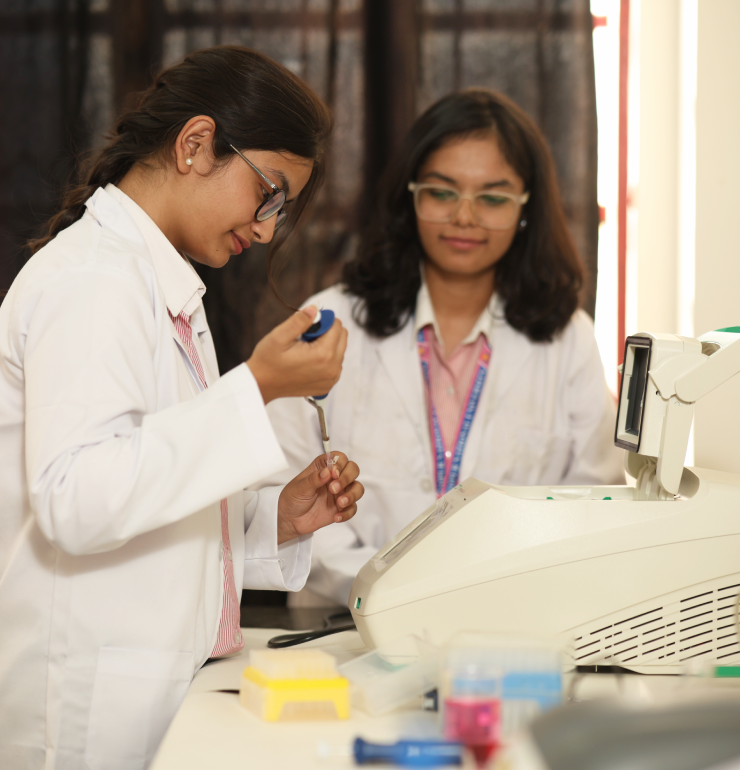
In BiotechnologyLab students learn various analytical techniques used to study structure and functions of biomolecules including HPLC, TLC, Chromatography, Spectrophotometry etc.
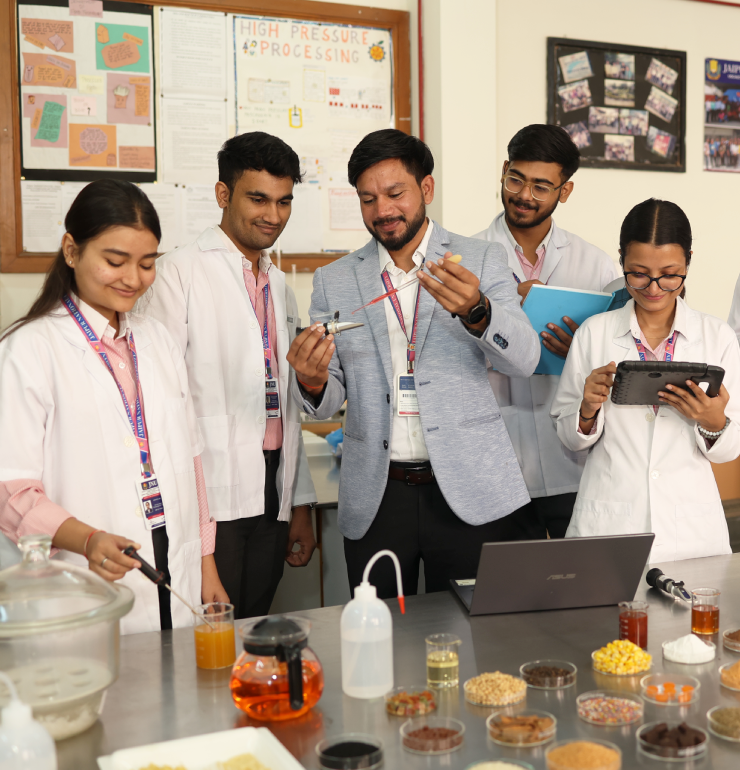
In Food and industrial biotechnology students learn fermentation technology, testing of adulteration and preserving food using different techniques.
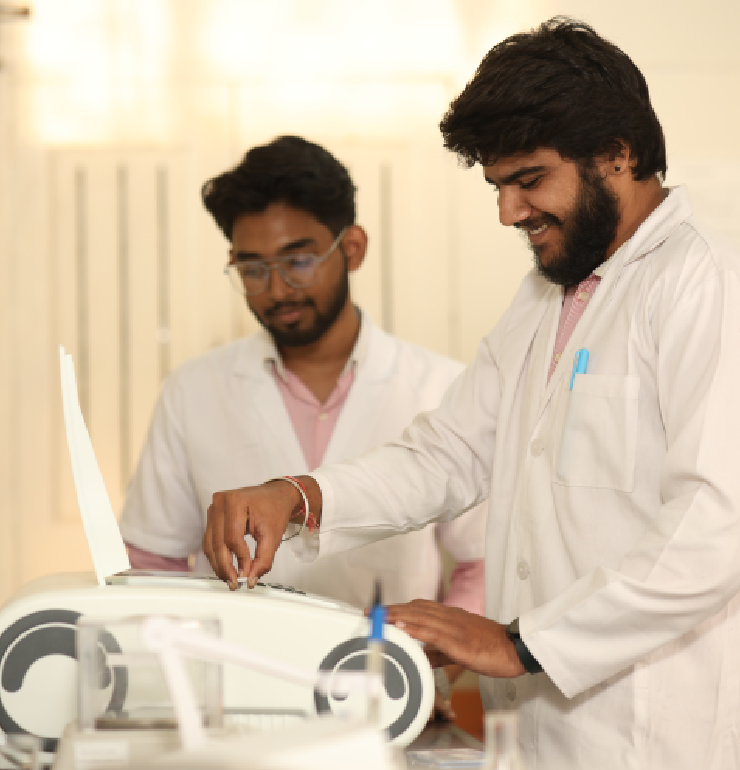
Bioprocess Engineering is an integrated application of disciplines such as biochemistry, bioinformatics, genetics, systems biologyand microbiology.
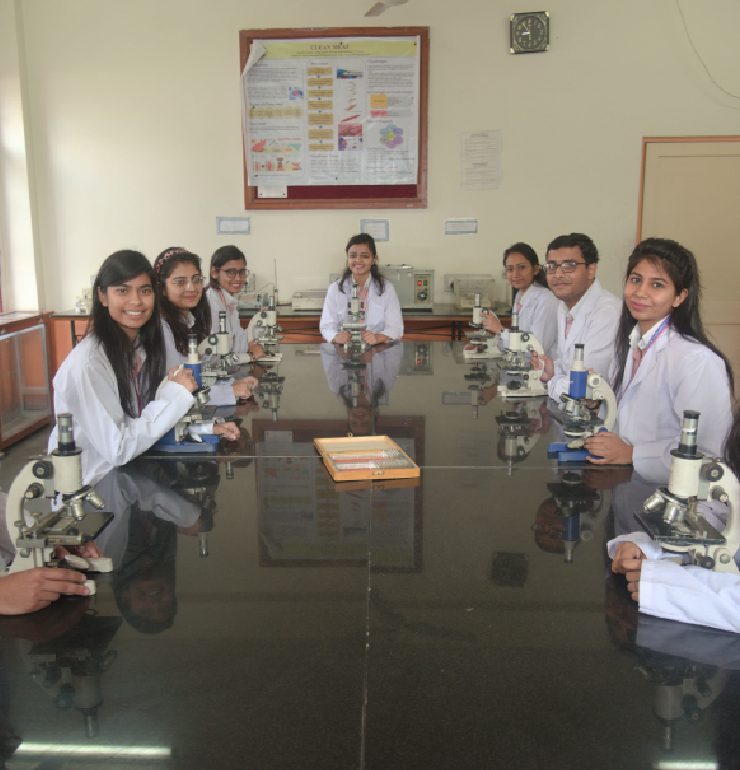
Systems biology relates to study of the interactions and behaviour of the components of biological entities, including molecules, cells, organs, and organisms. Here students learn isolation of nucleic acid, proteins their modelling, simulation and analysis.
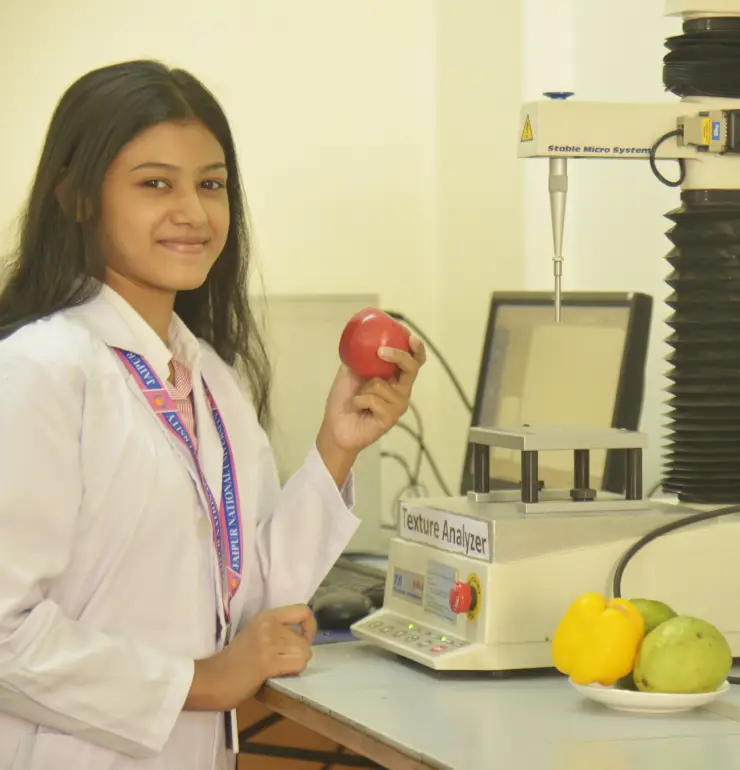
The Advanced Food Analytical Lab at Jaipur National University is equipped with cutting-edge technology for in-depth analysis and testing of food quality, safety, and nutritional.
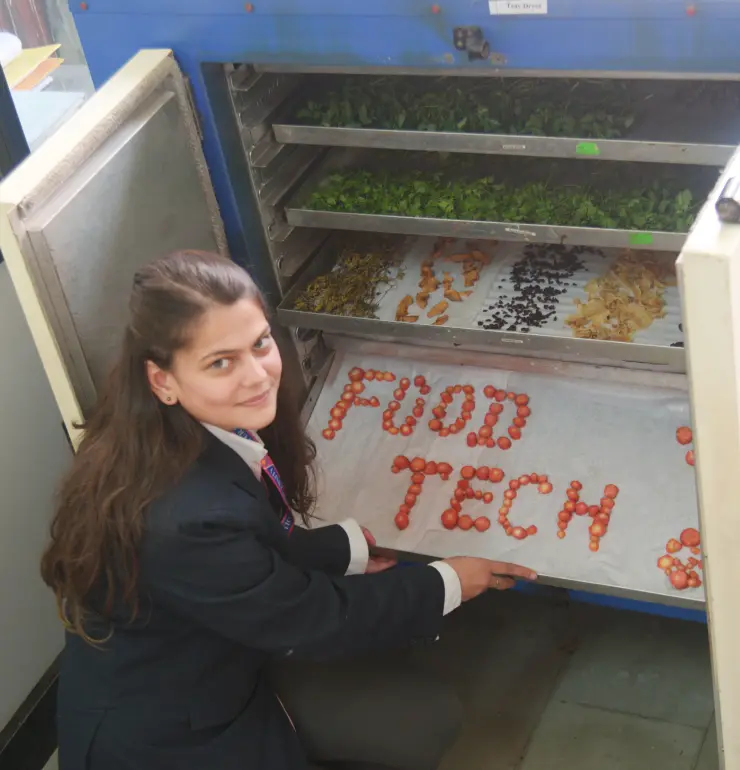
The Fruits and Vegetable Processing Lab at Jaipur National University is equipped with modern tools and machinery for studying and experimenting with the processing, preservation,and packaging of fruits and vegetables. It provides students with hands-on experience in techniques like drying, juicing, and fermentation, enhancing their practical knowledge of the food processing industry.
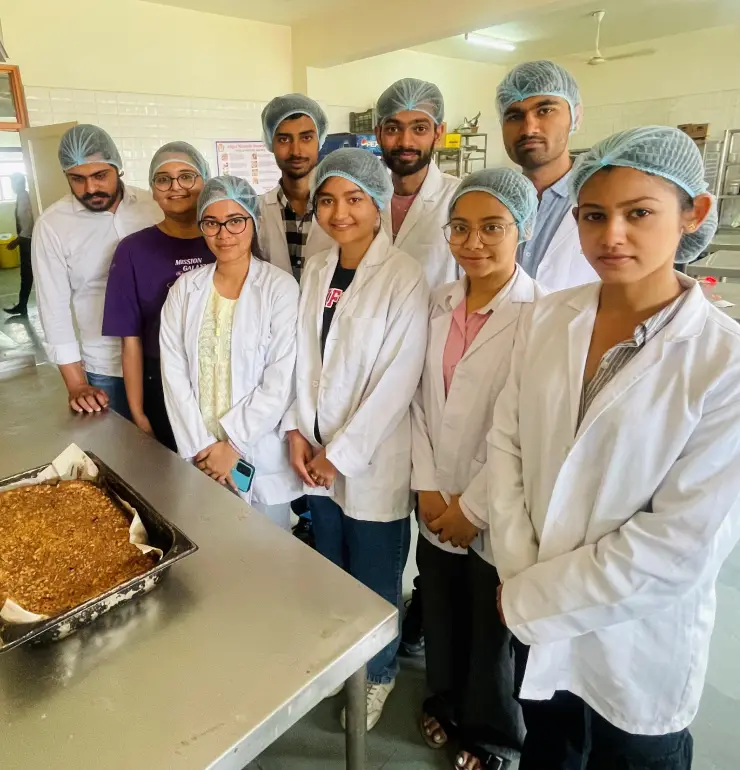
The Bakery and Confectionery Lab at Jaipur National University offers hands-on training in the art and science of baking and confectionery. Equipped with modern ovens, mixers, and other baking tools, it enables students to explore the techniques of bread-making, pastry production, cake decoration, and sugar confections.
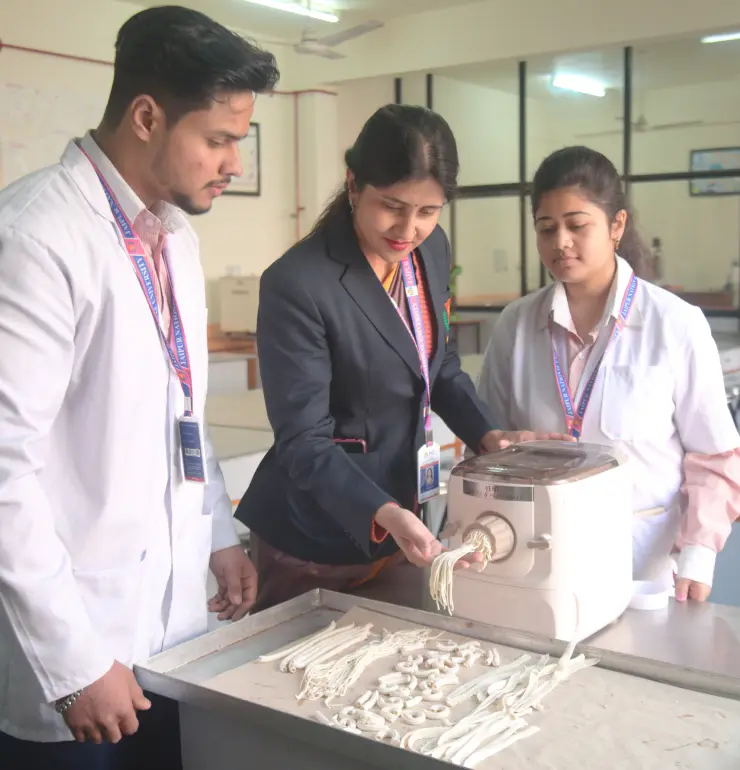
The Cereals and Legumes Processing Lab at Jaipur National University is designed to provide students with practical experience in processing and value addition of cereals and legumes. Equipped with modern machinery, the lab focuses on techniques like milling, fermentation, and fortification, helping students understand the nutritional, technological, and economic aspects of cereal and legume-based food products.
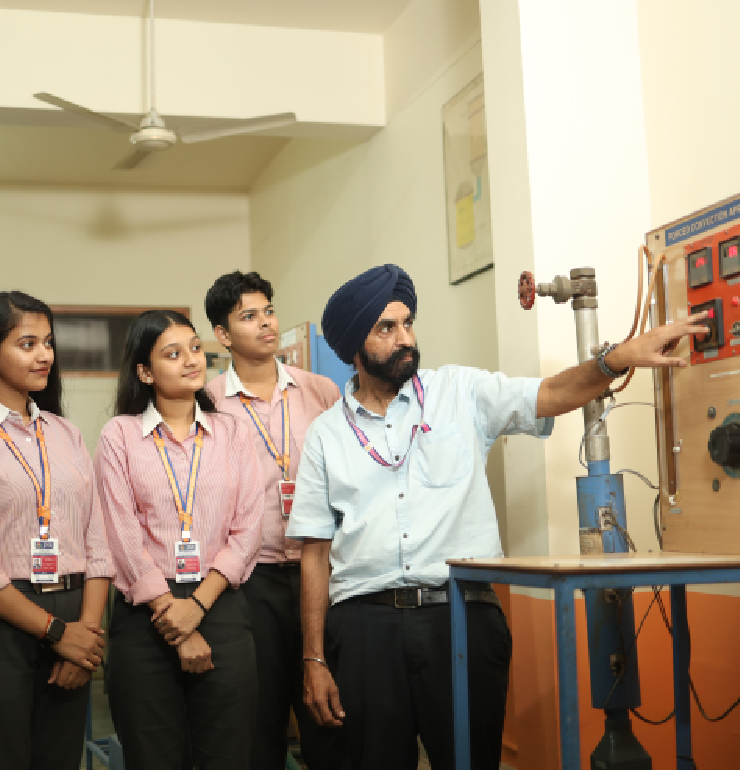
The Fluid Mechanics lab is well-equipped with essential apparatus for studying fluid dynamics, including Bernoulli's apparatus for pressure measurement, flow meters like the Pitot tube and Venturi meter for velocity and discharge measurement, as well as a sieve shaker for particle size analysis and a jaw crusher for testing material strength and flow behavior. These tools enable comprehensive experiments on fluid flow, pressure variations, and related phenomen.
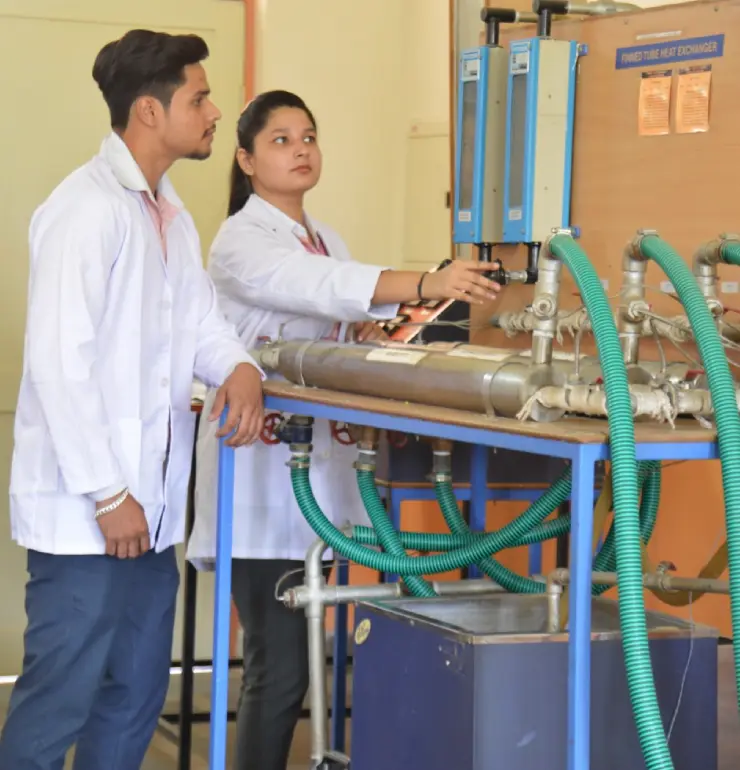
Heat Transfer lab provides the knowledge to the students about the energy transfer in various substances. Thus helping them in designing various heat transfer unit operations like heat exchangers, blowers, insulators etc.
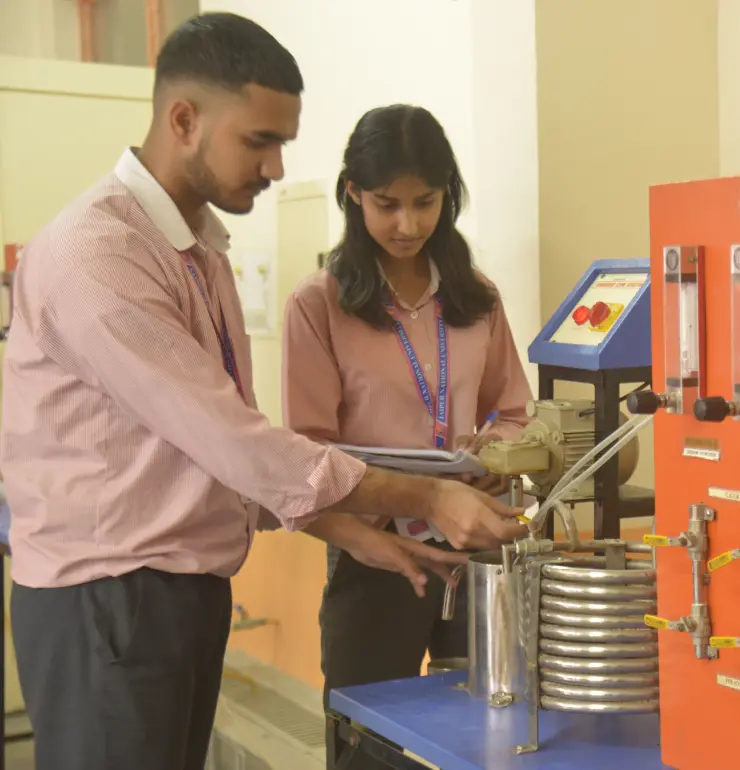
The Mass Transfer (MT) Lab bridges the gap between theoretical concepts and practical applications. Students engage with various unit operations, including the Rotary Dryer, Absorption Column, and Distillation Column, to understand and apply mass transfer principles in real-world scenarios. These hands-on experiments enhance their understanding of processes like drying, absorption, and separation.
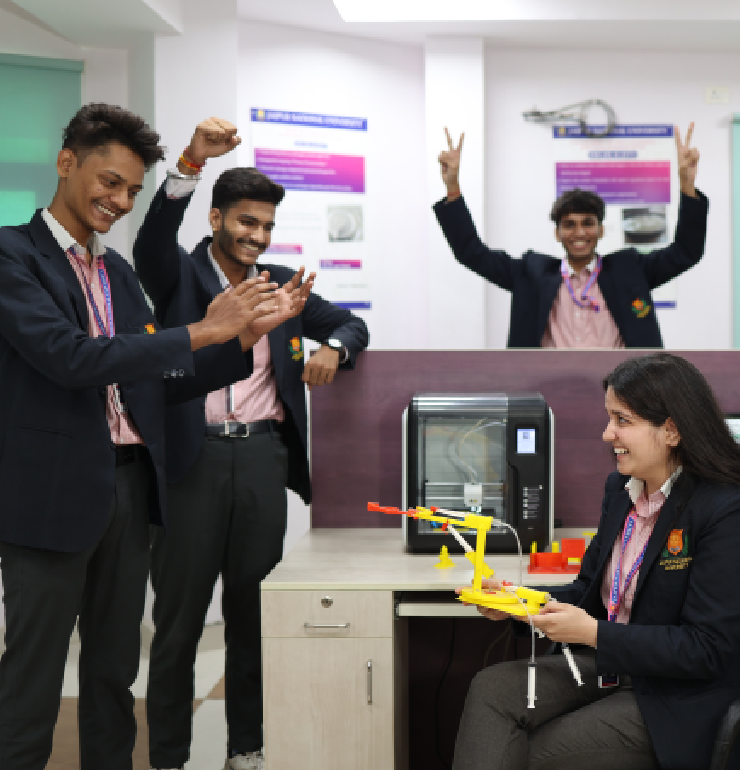
The IoT-based Arduino Microcontrollers lab explores using Arduino to connect sensors and devices to the Internet, enabling remote monitoring and control. Students learn programming, sensor integration, and communication protocols for real-world IoT applications.
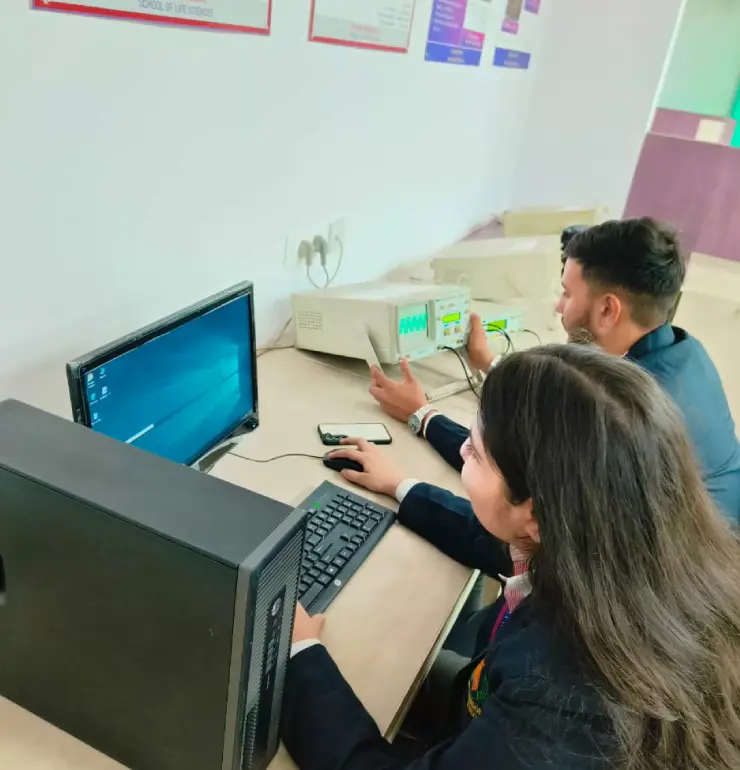
The Medical Image Processing lab focuses on techniques for analyzing medical images using software tools. Students learn to enhance, segment, and classify images, gaining skills in image analysis methods essential for medical diagnostics and research applications.
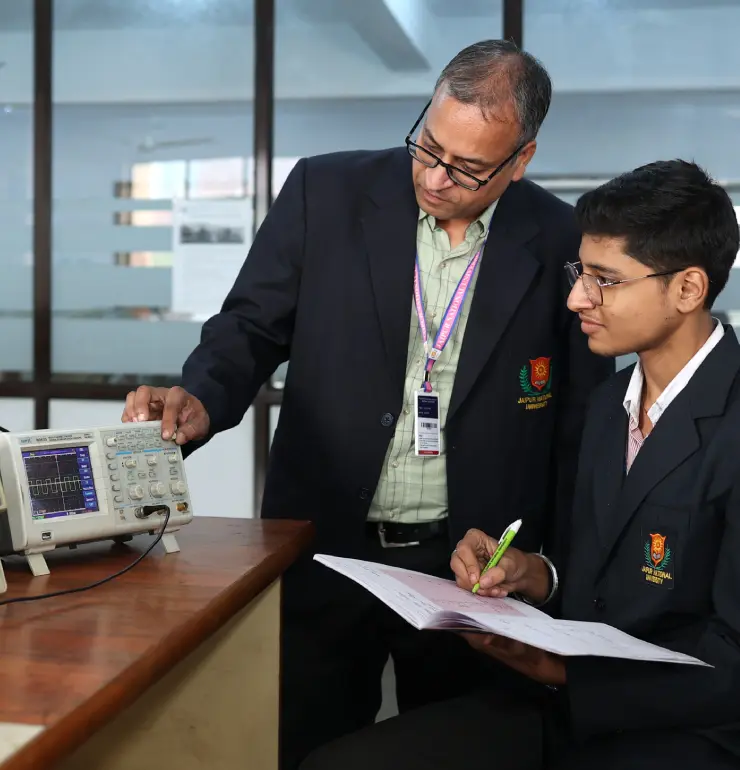
The Signal Processing lab introduces students to techniques for analyzing and manipulating signals using various software tools. Students learn filtering, transformation, and analysis methods, applying these skills to real-world audio, image, and biomedical signals.
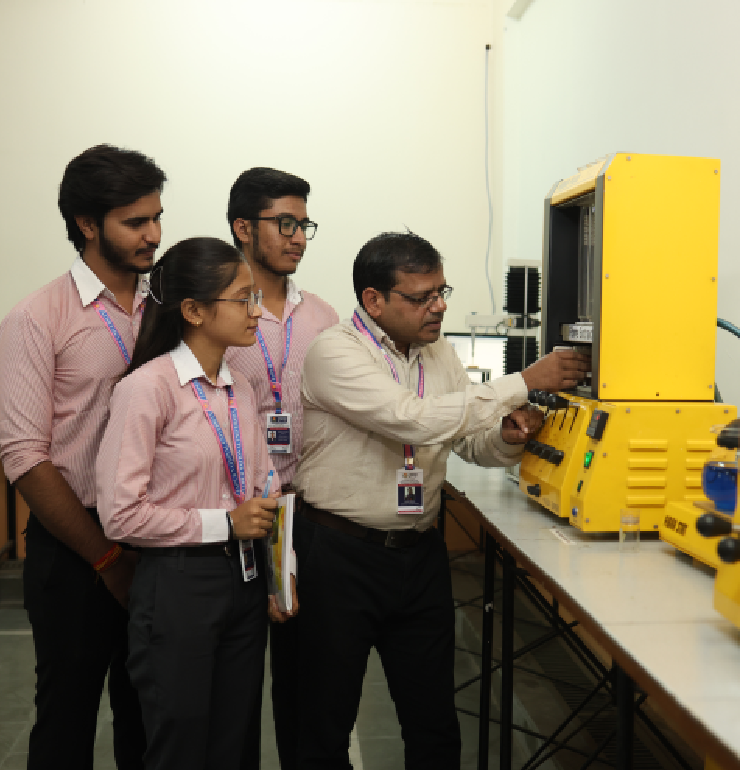
It helps the students in relating theoretical aspects of mass transfer to practical. Students work on many unit operations like Rotary dryer, Absorption Column, Distillation Column etc.
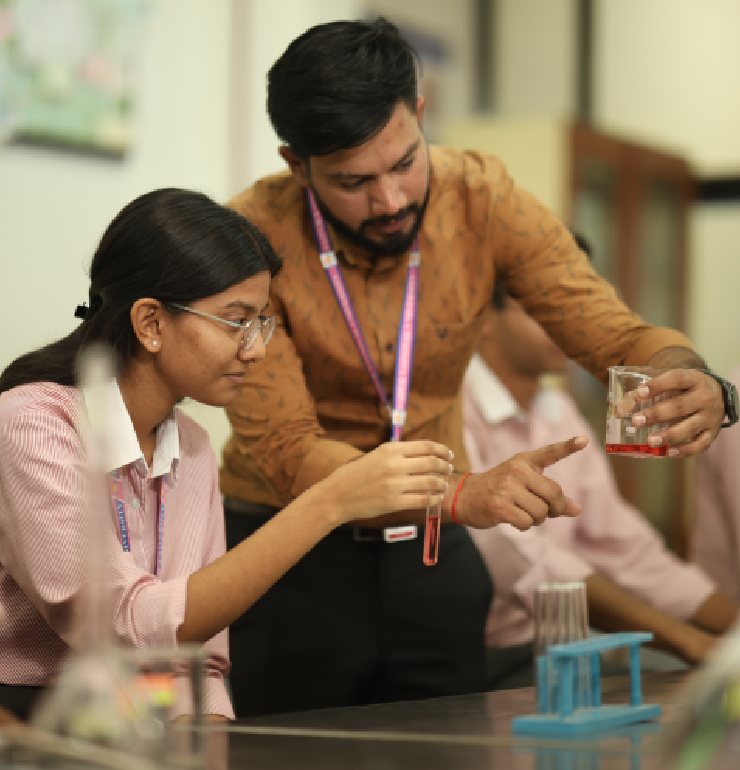
CRE lab enables the students to study different types of the reactors such as PFR’s, CSTR’s etc. used in the chemical industries and make them aware of calculating conversions and other parameters in these reactors.
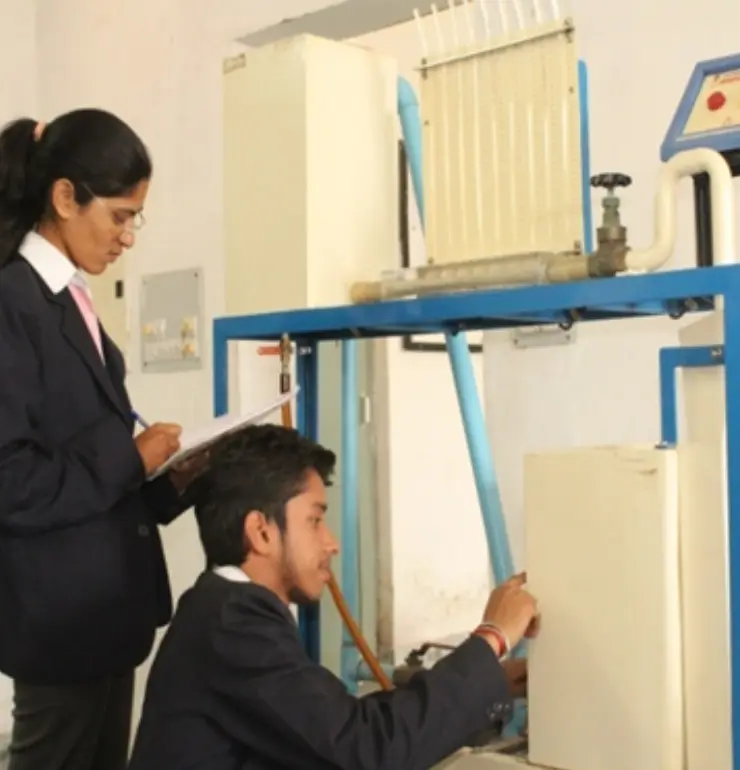
Fluid mechanics lab is equipped with bernoulli’s apparatus, flow meters like pitot tube, venturi-meter, Sieve shaker,jaw crusher etc.
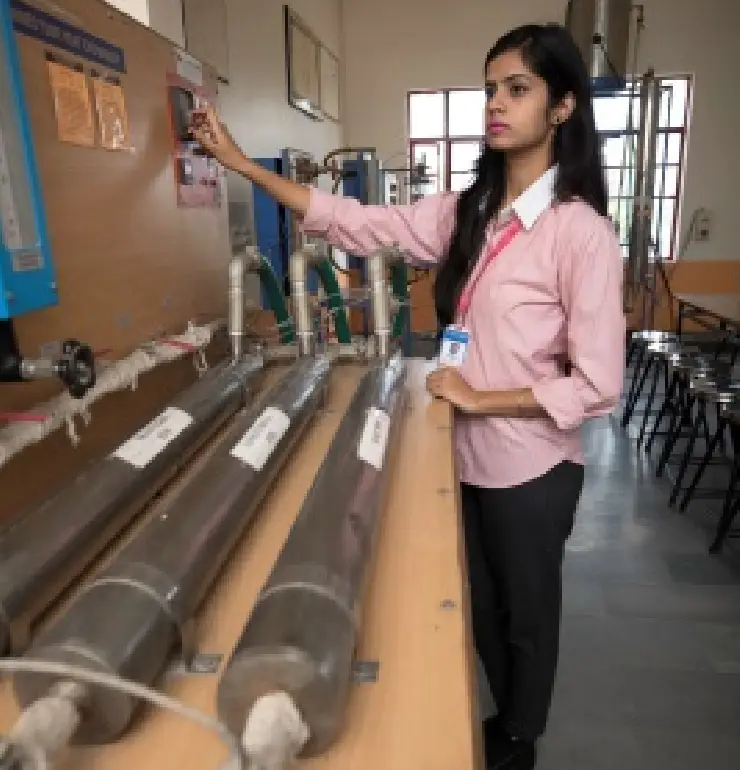
Heat Transfer Lab provides the knowledge to the students about the energy transfer in various substances. Thus helping them in designing various heat transfer unit operations like heat exchangers, blowers, insulators etc.
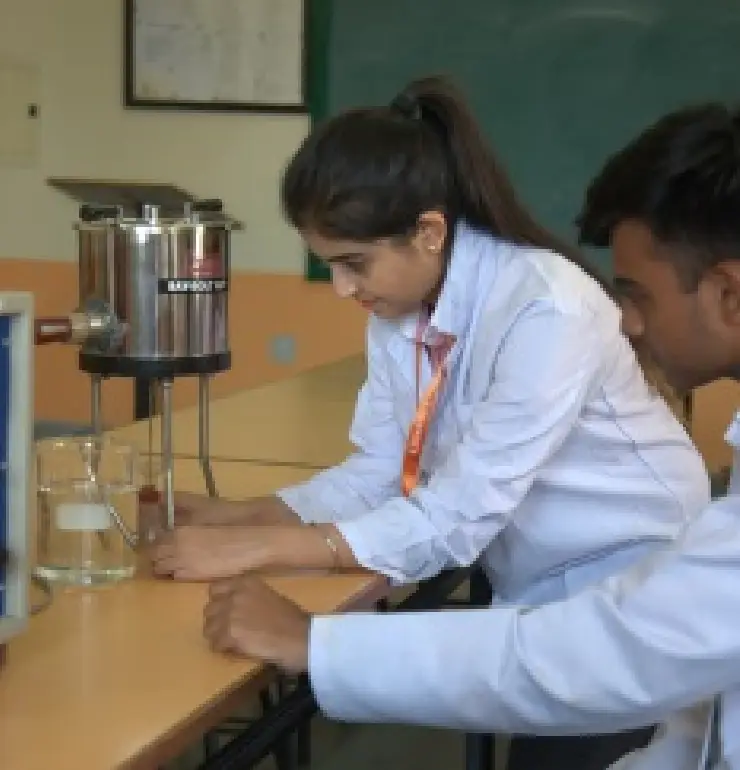
Petroleum Engineering Labhelps the student to study on different instrument and determination of fire and flash point and testing parameter of crude oil etc.
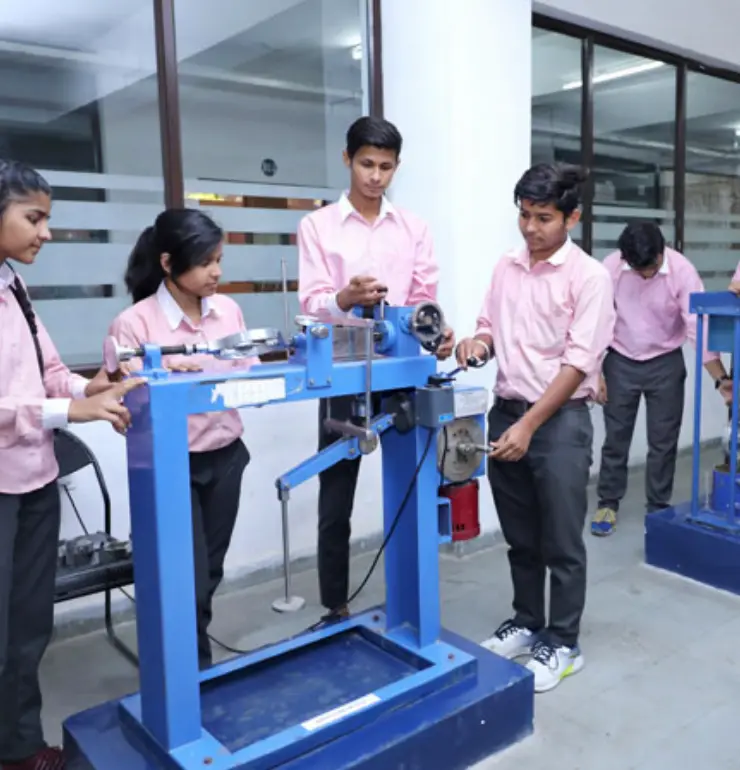
Materials Science Laboratory (MSL) is an interdisciplinary facility dedicated to study of current materials and those of future interest.

Heat and MassTransfer Laboratory caters to the needs of B.Tech. 3rd year Mechanical students. Experiments in this lab help the students to enhance their practical understanding of heat transfer modes.
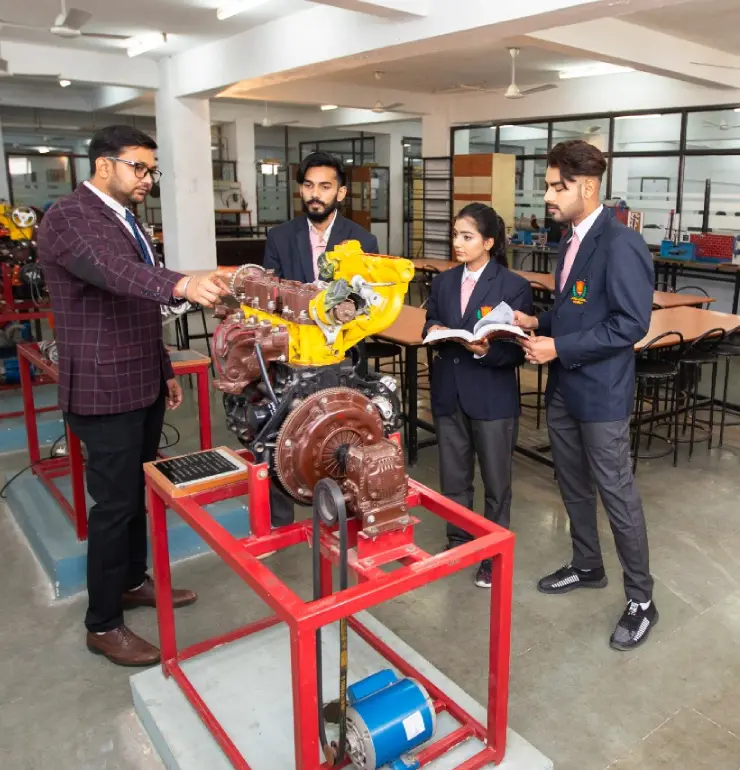
Modern automotive industries need experts in vehicle design and manufacture. With this in mind, the Automobile Engineering Lab is developed. This lab is in curriculum of B. Tech. Seventh semester.The objective of this lab is to give students a broad exposure in the design, development and testing of automobiles with emphasis on latest technologies.
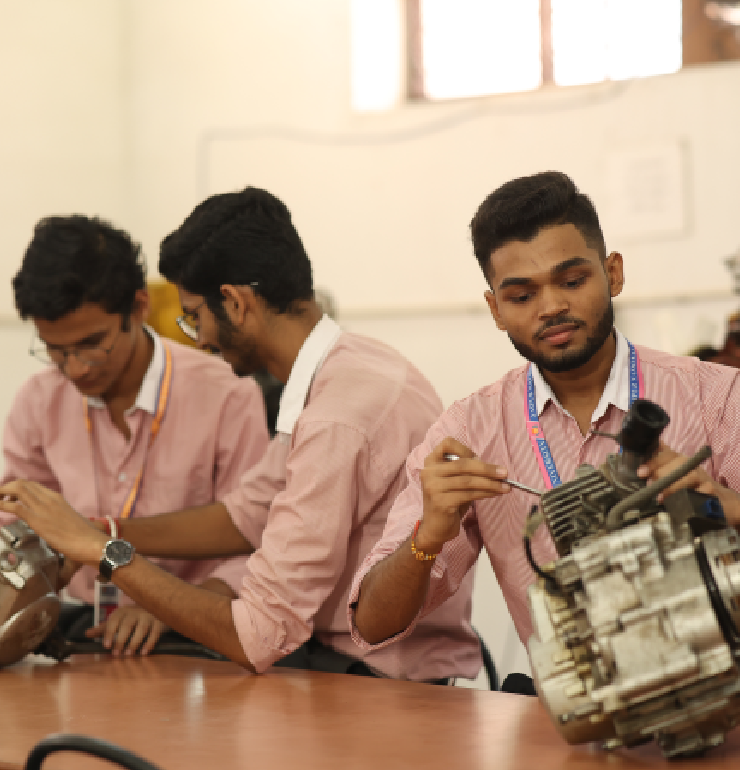
Manufacturing is the transformation of raw material into desired product. In this lab students learn about pattern making , casting, power press operation and drilling operations.
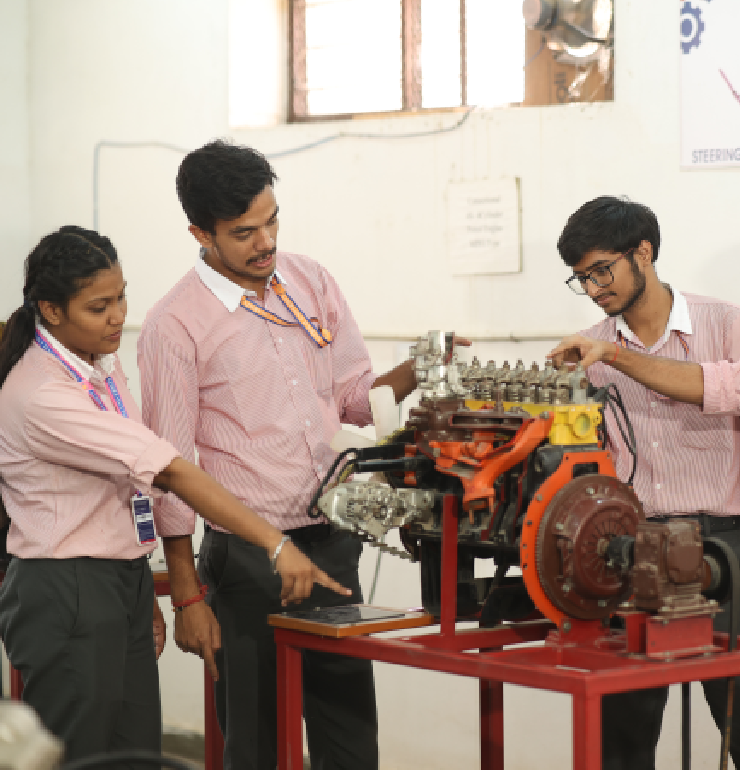
Fluid mechanics and Fluid machinery laboratories have all comprehensive experimental set-ups catering to the requirements of curriculum.
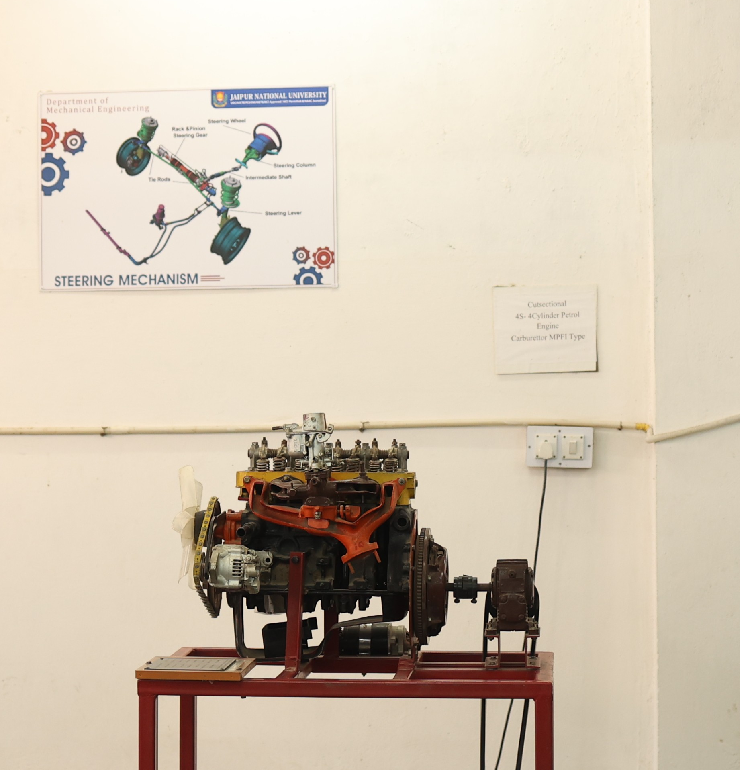
The Dynamics of Machines Lab has a large number of kinematics models as well as experimental equipments to impart practical learning of the subject to the students.
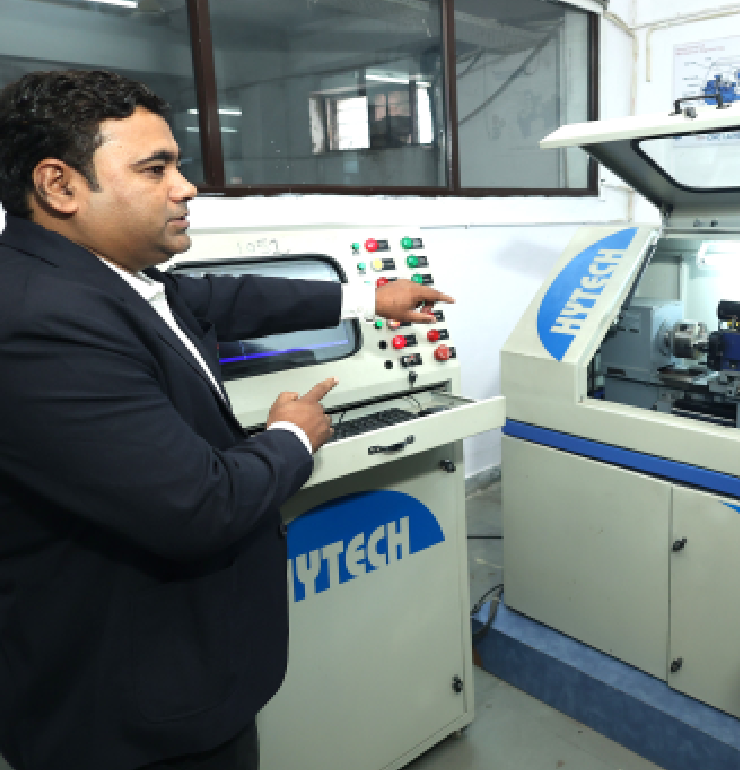
In this laboratory the students learn the fundamentals of numerical control (NC) technology, programming of computer numerical control (CNC) machines in NC codes and APT language and with CAD/CAM systems.
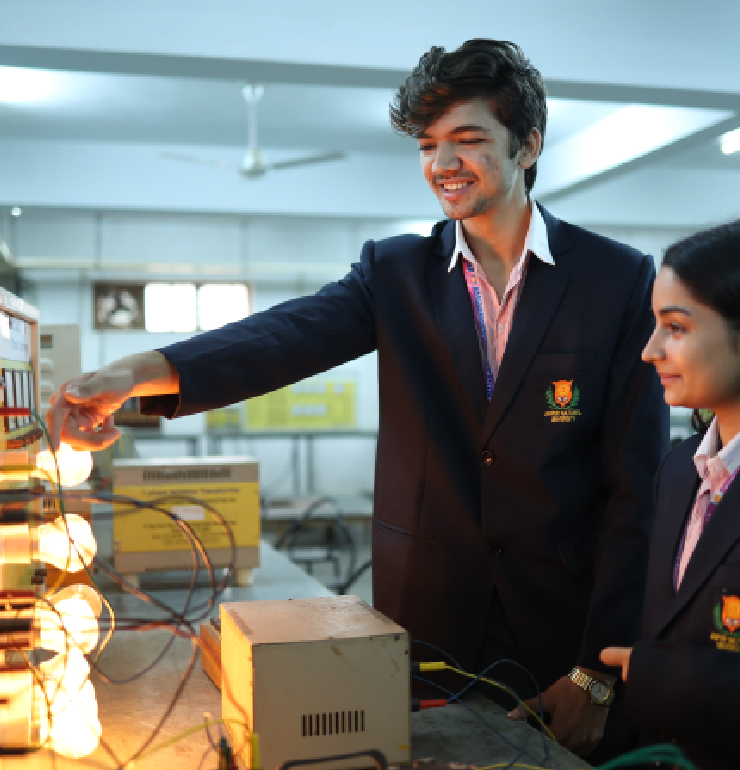
Electric machines are devices capable of transforming any form of energy into electrical energy and vice versa. They are classified into three major groups: electric generators, electric motors and transformers. Students learn how electrical machines are constructed and how they work, including DC motors, DC generators, and transformers.
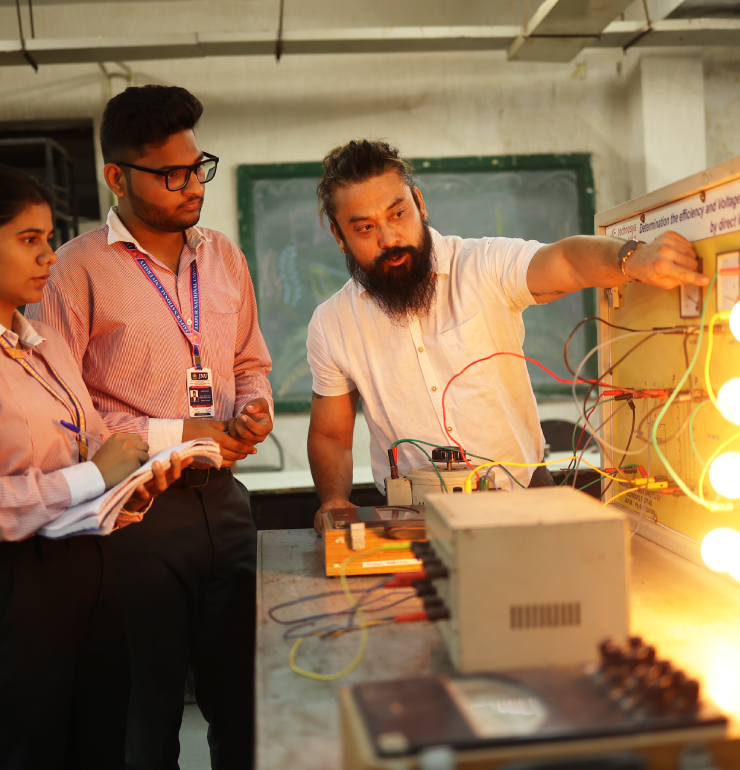
Students can learn to analyze and test power semiconductor devices with their applications.They can also compare and contrast different power semiconductor devices and also learn about the characteristics of power semiconductor devices and how they are used in real-world applications.
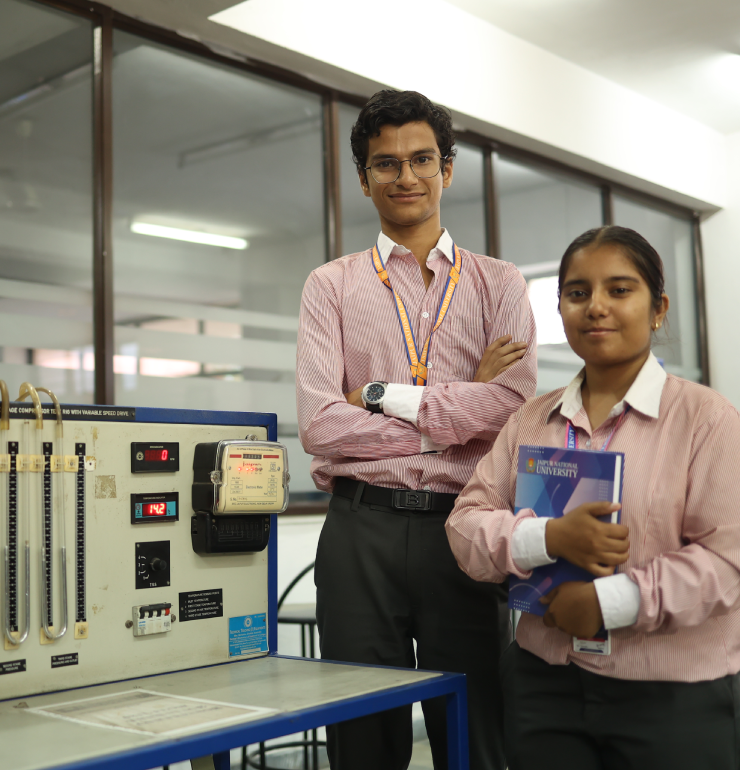
To continuously supply power of acceptable quality to consumers. The system is in equilibrium when power demand and power generated are balanced. Students learn how to test high voltage equipment, including switchgear, transformers, insulators, and cables.
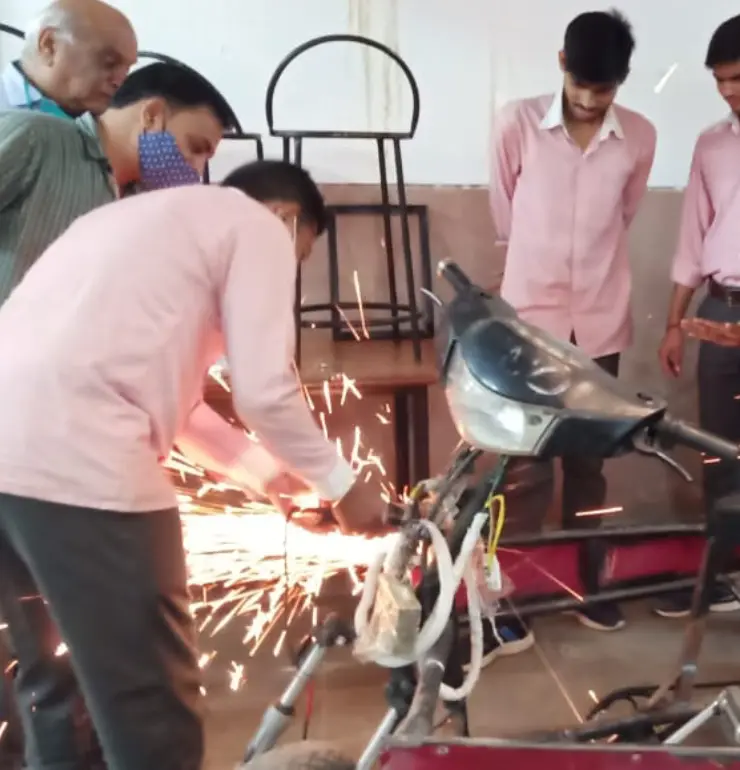
An Electrical Workshop Lab is a specialized facility or workspace where students, engineers, ortechnicians engage in hands-on learning and practical work related to electrical systems, circuits, andequipment. It serves as a place for experimentati













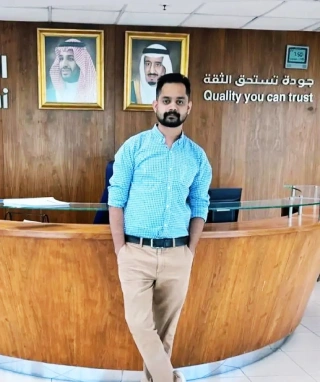






















JNU is a university with a very good environment. It provided me a platform to stand in the industry.


JNU has been instrumental in guiding me throughout the placement process.


I enjoyed each and every moment in this college. We have the best faculty in this college who treated us like a guide and a friend as well.


JNU, Jaipur is the university which imparts education as per the need of present competitive environment.

Here’s something magical in this place, which will make you fall in love with it.


Jaipur is the name which, I can’t forget in my whole life. My entire beautiful college life has been spent in it.

JNU, Jaipur is the university which imparts education as per the need of present competitive environment.


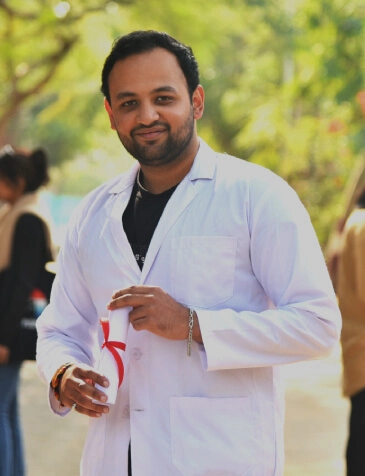
My B.Tech. in Biomedical Engineering at JNU (2020-2024) has been pivotal in shaping my career in Biomedical Instrumentation and IT.


This program is ideal for anyone starting a career in Biotechnology, offering numerous opportunities for personal and professional growth.


The B.Tech in Biotechnology program is an excellent choice for students looking to explore their interests and gain practical experience before graduating.


Jaipur National University played a key role in shaping my entrepreneurial mindset. The Computer Science department's diverse curriculum and project-based learning fueled my passion for problem-solving and innovation.


My time at Jaipur National University was crucial in shaping my career. The hands-on experience in cloud computing and networking laid the foundation for my role at AWS.


I sincerely thank my professors for their constant support and encouragement.


University has provided an exceptional platform for my growth and development. The beautiful campus, blending nature with student-friendly amenities like research labs, well-equipped facilities, a library, gym, basketball court, and cafeteria, is remarkable.


I chose Jaipur National University for my bachelor's studies, and it provided the perfect platform to explore my abilities.


As a B.Tech ECE student (2014-18), I'm proud to share that I've been selected as a Lieutenant in the Indian Army after clearing the written exam and service interview.








The SADTM campus is located on the Jaipur-Agra Bypass Road, about 20Km from Heart of the city. You can reach by private vehicle, or by hiring a taxi or using local conveyanceavailable from major city points.
The campus environment is academically stimulating, with well-equipped labs for experiments conducted for B.Tech (Biotechnology, Biomedical, Civil, Electrical, Electronics, Food technology. Faculty are experienced, and the university encourages research and hands-on projects, ensuring students receive a practical, well-rounded education.
The university has a zero-tolerance policy towards ragging. Anti-ragging committees and helplines are active, and the campus is under strict surveillance to ensure a safe and welcoming environment for all students.
Yes, the university has a dedicated Training & Placement Cell that collaborates with top companies for internships and placements. Regular placement drives are organized, and students are trained in interview skills, resume building, and technical skills to ensure they’re job-ready.
The hostel facilities for boys and girls in different campuses are available with options for single, double, and triple occupancy. Amenities include Wi-Fi, common rooms, 24/7 security, and mess services providing nutritious meals.
The university emphasizes research and development, offering students opportunities to work on projects funded by government agencies and private firms. Well-equipped labs and mentorship from faculty support student research initiatives.
The university promotes holistic development with sports facilities for cricket, basketball, volleyball, football and more. The university has an indoor sports complex with facilities for Gym, Basketball, badminton etc.
The school provides extensive support services, including academic advising, counselling, and career guidance. Students have access to faculty mentors, skill development programs, and workshops that aid their personal and academic growth.
Yes, JNU Jaipur offers merit-based and need-based scholarships for deserving students. Scholarships may vary based on academic performance, entrance exam scores, and financial need. Details are available during admission counselling.
The school of Engineering and Technology organizes numerous student-oriented activities, such as technical workshops, hackathons, industry visits, and seminars/webinars. These events aim to boost practical learning, hands-on skills, and collaboration among peers, ensuring students keep updated with industry needs.
Faculty members actively mentor students in academic and career planning. Faculty members regularly host extra tutorial sessions, guide projects, and advise students on research and internships, fostering an environment of personalized learning.
Yes, Various clubs and societies for arts, music, and technical skills allow students to explore their interests beyond academics.The school has a variety of student-led clubs, including Art and Culture, Unicorn, photography, go-Green club helping to ensure student gaining leadership, teamwork, and project management skills.These clubs allow student explore there interest beyond academics.
Copyright © 2026 Jaipur National University. All Rights Reserved.
Website Design and Development by Sterco Digitex