
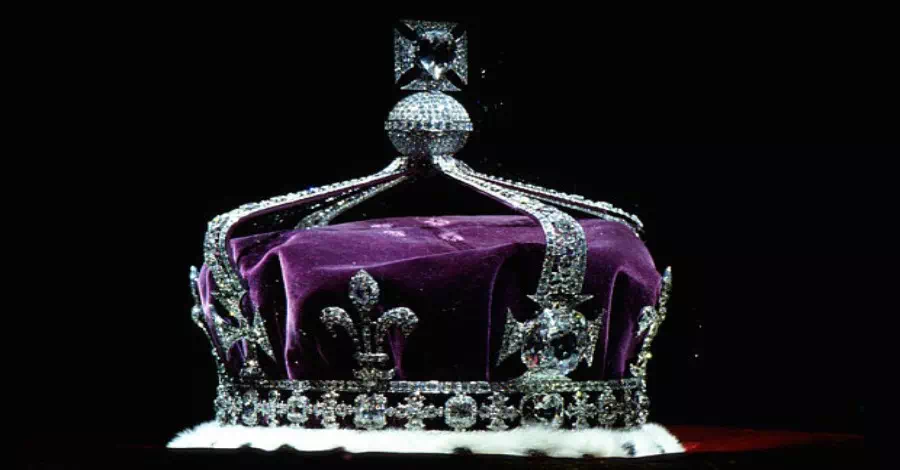
Kohinoor the infamous diamond
INDIA may have a long wishlist of rare antiquities that were shipped out of the country by a succession of foreign rulers, particularly the British, but getting them back home would be easier said than done.
International law and conventions don't permit us to do so. " India enacted the Antiquities Export Control Act in 1948. But by then the British had taken away several invaluable artifacts," said a senior Archaeological Survey of India official.
The only way out is diplomatic persuasion and negotiations, says Nayanjot Lahiri, historian and dean of colleges, Delhi University. The other option is to shell out the current market price for the treasures. The Restitution of Cultural Properties under the 1970 Hague Convention of the UNESCO allows this. Egypt, which like India lost a lot of its antiquities, has consistently campaigned with countries for their return and to a great extent has been successful.
The country's Supreme Council of Antiquities led by Zahl Hawass has got back 31,000 such artifacts -- much of this has been achieved through the route of diplomatic persuasion and negotiations.
It's not that India hasn't ventured in this direction. It has, but only with limited success.
A old bronze Vishnu originally from Sagardighi, Murshidabad, was recently brought home from the US. The Hague Convention rules that a claimant country first has to establish the authenticity of its claim and provide enough documentation to support its assertions.
For instance, India must establish that an artifact it wants back home was genuinely taken away from a place within its present territorial limits. But because most of the treasures transported during the British period are still locked up in personal collections it becomes all the more difficult to get their source and history verified.
These only catch the public eye when they come up for auctions. Of late, India has joined a UNESCO- led campaign to get back its lost treasures. Among the others in this campaign are countries such as Bolivia, China, Greece, Iraq, Libya, Mexico, South Korea and Sri Lanka. Among India's dazzling treasures taken away by the British was the exquisite Kohinoor diamond now lodged in the Tower of London and the famous Sultanganj Buddha, presently in the Birmingham Museum. The list is long. Worse, what one gets to see stacked in museums during trips to the UK and the US is a mere 10 per cent of what had been taken away. A fabulously rich collection of unseen Indian treasure is with personal collectors abroad.
Sangeet Basu Biswas
BJMC 1st Year
 Back
BackRecent Post
- How to Find the Best Universities in Uttar Pradesh?
- Why Digital Marketing Is One of the Most Future-Ready MBA Specializations
- How to build the best CAT preparation strategy
- The Role of Nurses in Societal Stratification: Medicine for Life
- BBA Full Form Explained: Is This The Right Degree For You?
- BCA Full Form, Subjects, and Career Pay
- The JEE Exam Has More To It Than Just Tough Questions
- Everything About NID, The National Institute Of Design
- My First Clinical Experience: Reflection on Mistakes, Learning & Developing Competence
- From Textbooks to Heartbeats: What Students Should Not Experience
Categories
Archives
Contact Form


Copyright © 2026 Jaipur National University. All Rights Reserved.
Website Design and Development by Sterco Digitex


Browse by School
- School of Engineering & Technology
- School of Business & Management
- School of Computer & Systems Sciences
- School of Education
- School of Languages, Literature and Society
- School of Life & Basic Sciences
- School of Pharmaceutical Sciences
- School of Media Studies
- School of Fashion Design
- Seedling School of Law and Governance
- Seedling School of Nursing
- Seedling School of Allied and Healthcare Sciences
- School of Agricultural Sciences
- School of Hotel Management & Catering Technology
- Jaipur National University Institute for Medical Sciences and Research Centre