
Building Blocks for a Sustainable and Culturally Fit Society
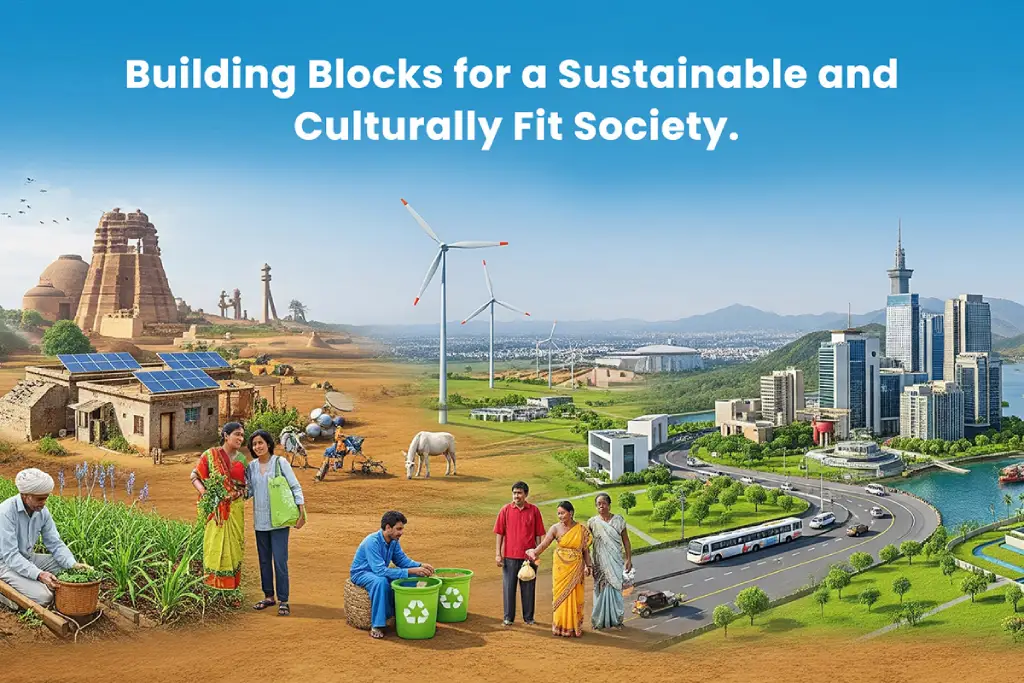
In today's fast-changing world, the immediate need for a sustainable and culturally relevant society has never been more crucial. Social discrimination, climate changes, and the demolition of cultural values are contaminating the very core of our society. To flourish, we must lay down solid establishments that harmonize natural preservation, social legacy, and financial development. However, what are the important aspects of such a society? Can we build a world where the coming generation can thrive without losing their sense of self? Let's begin by looking at the key elements that can help us create a resilient, inclusive, and sustainable future.
1. Environmental Maintainability: Preserving the soil is important for creating a future that is affordable. Fertile soil, pure water, and uncontaminated air are essential to our existence, however human activity is still depleting these vital resources. Adopting renewable energy will help us end this way. By switching from fossil fuels to solar, wind, and hydroelectricity, we can lower carbon emissions and fight climate change.
- Encourage Circular Economies: To reduce waste, we should reuse, recycle, and upcycle resources rather than using the "take-make-waste" approach.
- Biodiversity Preservation: Ecosystems are in danger from pollution, overfishing, and deforestation. Balance can be restored through sustainable farming practices and conservation initiatives. Future generations will inherit a habitable world if we put the planet first.
1. Preservation: Honoring Customs While Changing with the Times A society's values, traditions, and identities are shaped by its culture, which is its lifeblood. However, cultural uniformity brought about by industrialization and globalization frequently results in the disappearance of distinctive customs.
Essential actions are-
- Awareness and respect for Traditions: To maintain cultural vitality, it is crucial to preserve and pass down oral histories, festivals, and artistic expressions.
- Why Promote Indigenous Information Indigenous societies have information about sustainable living that might be useful to modern civilizations.
- It is necessary to promote intercultural interaction since diversity is valued and demonstrates respect for one another while maintaining our individual cultural identities.
Rather than restricting alter, a fit culture invites headway without losing its center.
2. Social Justice: Filling the Divide No one is left behind in a society that is genuinely sustainable. Society is shattered by bigotry, economic inequality, and limited access to healthcare and education. To increase equity, we require:
- Inclusive Policies: Anti-discrimination legislation, gender equality, and fair salaries must be guaranteed by governments and organizations.
- High-quality education for all: Education enables individuals to end poverty cycles and make significant contributions to society.
- Universal Healthcare: Good health should not be considered a luxury; it is an essential right. Affordable healthcare ensures a thriving and efficient society. Society as a whole is strengthened when everyone has equal opportunities.
3. Economic Resilience: Juggling Purpose with Profit Exploitation and environmental harm have resulted from the quest for unending economic growth. Rather, we require an economy that benefits both the environment and people. Important actions consist of:
- Ethical Business Practices: Organizations ought to put sustainability ahead of immediate financial gain.
- Localized Economies: By empowering little companies and local-regional craftspeople, communities have gotten solid, and carbon impressions are diminished.
- Universal Basic Resources: To lessen inequality and desperation, everyone should have access to food, water, and shelter. An economy that prioritizes people and the environment over profit is said to be resilient.
4. Community Involvement: The Strength of Group Initiatives Community involvement is necessary for change to occur; it cannot occur in a vacuum. When individuals band together, they can:
- Start grassroots movements: From cultural revival initiatives to climate strikes, meaningful change is fueled by group action.
- Create vigorous Local Networks: Neighborhood initiatives, co-ops, and community gardens promote resiliency and unity.
- Promote Civic Participation: Everyone's voice is guaranteed through voting, policymaking, and open discourse. A together community is a force for cultural preservation and sustainability.
Technology Innovations: It instruments for a Better Future Depending on how we use it, technology can either be a boon or a bane. Technology can help with sustainability and cultural preservation in the following ways:
- Enhance Green Energy Solutions: Smart grids, energy-efficient structures, and electric cars lessen their negative effects on the environment.
- Digitalization of Cultural Heritage: Online archives and virtual museums preserve customs for coming generations.
- Improve Education: By bridging literacy and skill gaps, e-learning platforms make knowledge available to everyone. When development is done mindfully, innovation benefits humankind instead of taking advantage of it.
6. Attitude Shift: From Consumption to Responsible Living The biggest barrier to sustainability is often our own mindset. Constant buying is encouraged by the consumerism culture, which leads to waste and environmental harm.
- Adopt a modest lifestyle: Making fewer purchases and prioritizing quality over quantity results in less waste.
- Why Place More Value on Experiences Than Things: Relationships and memories provide greater satisfaction than tangible possessions.
- Take a Long-Term View: Every choice you make should take future generations into account. Shifting from "me" to "we," a community is built that prospers.
In conclusion, shaping a better future requires deliberate effort, collaboration, and a shared vision to build a society that is both sustainable and culturally respectful. By bringing together care for the environment, pride in our cultures, fairness in society, equal opportunities, strong communities, smart use of technology, and thoughtful lifestyles, we lay the foundation for a future that values both individuals and the planet. So, what role will you choose to play? Every action matter, whether it's promoting policy reforms, supporting local cultures, or forming sustainable habits. By working together, we can create a civilization that not only survives but flourishes with pride and purpose. Now is the moment to act. Let's construct sensibly.
Author- Ananya Mishra
School of Language, Literature, and Society
 Back
BackRecent Post
- How to Find the Best Universities in Uttar Pradesh?
- Why Digital Marketing Is One of the Most Future-Ready MBA Specializations
- How to build the best CAT preparation strategy
- The Role of Nurses in Societal Stratification: Medicine for Life
- BBA Full Form Explained: Is This The Right Degree For You?
- BCA Full Form, Subjects, and Career Pay
- The JEE Exam Has More To It Than Just Tough Questions
- Everything About NID, The National Institute Of Design
- My First Clinical Experience: Reflection on Mistakes, Learning & Developing Competence
- From Textbooks to Heartbeats: What Students Should Not Experience
Categories
Archives
Contact Form


Copyright © 2026 Jaipur National University. All Rights Reserved.
Website Design and Development by Sterco Digitex


Browse by School
- School of Engineering & Technology
- School of Business & Management
- School of Computer & Systems Sciences
- School of Education
- School of Languages, Literature and Society
- School of Life & Basic Sciences
- School of Pharmaceutical Sciences
- School of Media Studies
- School of Fashion Design
- Seedling School of Law and Governance
- Seedling School of Nursing
- Seedling School of Allied and Healthcare Sciences
- School of Agricultural Sciences
- School of Hotel Management & Catering Technology
- Jaipur National University Institute for Medical Sciences and Research Centre