
Artificial Intelligence and Healthcare Industries
Introduction
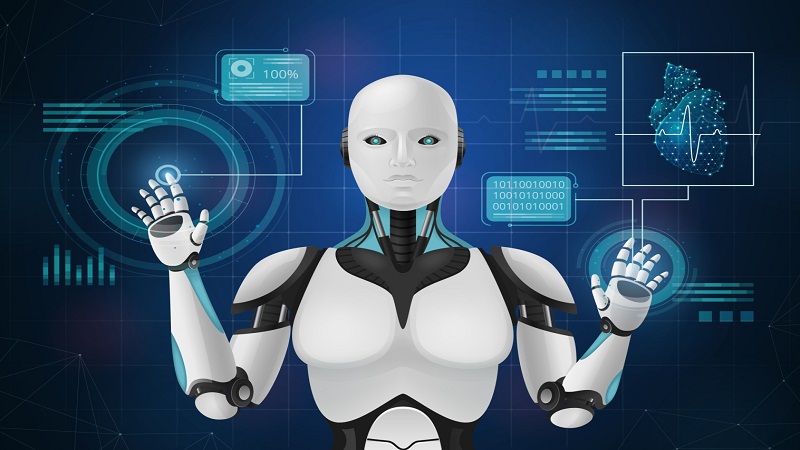
Innovation in Artificial Intelligence (AI) is rapidly transforming the life sciences and healthcare industries. The use of AI technologies in these fields has the potential to revolutionize the way we diagnose, treat, and prevent diseases, and improve overall patient outcomes. In this blog, we will explore some of the key areas where AI is making a significant impact in life sciences and healthcare.
AI is transforming the life sciences and healthcare industries in many ways. From drug discovery to personalized medicine, AI is helping to improve patient outcomes, reduce healthcare costs, and advance medical research. As AI technology continues to evolve, we can expect to see even more innovative applications of this technology in the healthcare sector
Drug Discovery
The process of discovering new drugs can be a long and costly endeavor. However, AI is helping to speed up this process by analyzing large data sets to identify potential drug candidates. Machine learning algorithms can sift through massive amounts of data and identify patterns that may not be immediately apparent to humans. This can help researchers to identify new targets for drug development, and even predict which drug candidates are most likely to succeed in clinical trials.
Medical Imaging
AI is also transforming the field of medical imaging. Computer vision algorithms can analyze medical images such as X-rays, MRIs, and CT scans to detect abnormalities that may be missed by human observers. This can help doctors to make more accurate diagnoses, and even predict the likelihood of certain diseases developing in the future.
Personalized Medicine
AI can also help to personalize medical treatments for individual patients. By analyzing a patient's genetic makeup, medical history, and other relevant data, AI algorithms can help doctors to identify the most effective treatment options for each individual patient. This can help to improve patient outcomes and reduce healthcare costs by avoiding treatments that are unlikely to be effective
Virtual Assistants
Virtual assistants are becoming increasingly common in healthcare settings. AI-powered chat bots and voice assistants can help patients to schedule appointments, answer basic medical questions, and even provide personalized health recommendations. This can help to improve patient’s engagement and provide more efficient healthcare services.
Disease Prevention and Management
AI is also being used to predict and prevent the spread of diseases. Machine learning algorithms can analyze large datasets such as social media feeds, search engine queries, and other sources of data to detect outbreaks of diseases and predict their spread. This can help public health officials to respond more quickly to outbreaks and prevent the spread of diseases.
Precision Surgery:
AI is being used to improve precision surgery by providing real-time information and feedback to surgeons during procedures.
Clinical Trials:
AI is being used to design more efficient and effective clinical trials by identifying patients who are most likely to benefit from a particular treatment and reducing the time and cost of conducting trials.
Electronic Health Records (EHR):
AI is being used to analyze electronic health records to identify patterns and trends in patient data that can help physicians make more informed treatment decisions.
Artificial intelligence (AI) has the potential to revolutionize the education sector by automating routine tasks, personalizing learning experiences, and providing new opportunities for assessment and feedback. Here are some specific applications of AI in education:
Personalized Learning:
AI-powered educational software can customize learning experiences for individual students based on their abilities, interests, and learning style. This allows students to learn at their own pace and in a way that suits them best.
Intelligent Tutoring Systems:
AI-powered tutoring systems can provide students with feedback and guidance as they work through problems. These systems can also adapt to the student's progress, adjusting the level of difficulty as needed.
Virtual Assistants:
AI-powered virtual assistants can provide students with instant support and answers to their questions. These assistants can also help teachers manage administrative tasks and provide personalized recommendations for students.
Automated Grading:
AI-powered grading systems can evaluate and grade assignments quickly and accurately, freeing up teachers' time for other tasks.
Predictive Analytics:
AI can analyze student data and provide insights into student performance and behavior. This information can help teachers identify areas where students may be struggling and provide targeted interventions to support their learning.
Educational Games and Simulations:
AI-powered educational games and simulations can provide engaging and interactive learning experiences that help students develop critical thinking, problem-solving, and decision-making skills.
Overall, AI has the potential to transform the way we teach and learn, making education more efficient, effective, and engaging for students and teachers alike.
What are some examples of AI?
Examples of AI include voice assistants like Siri and Alexa, self-driving cars, image recognition technology used in security systems, personalized recommendations on streaming services, and chat bots used for customer service.
How does AI work?
AI works by using algorithms and mathematical models to process large amounts of data and extract meaningful patterns and insights. These algorithms can be trained using supervised, unsupervised, or reinforcement learning techniques, depending on the type of task the AI system is designed to perform.
What are the benefits of AI?
AI has the potential to automate repetitive tasks, improve decision-making, enhance efficiency and productivity, and enable new discoveries and innovations in various fields, such as healthcare, finance, and transportation.
What are the risks of AI?
Some risks associated with AI include job displacement, bias in decision-making, privacy concerns, and potential misuse of AI for malicious purposes.
What is the future of AI?
The future of AI is expected to involve greater automation, more personalized experiences, and new applications in areas such as augmented reality, virtual reality, and the Internet of Things. However, it is important to continue to monitor and regulate the development and use of AI to ensure that it benefits society as a whole.
 Back
BackRecent Post
- How to Find the Best Universities in Uttar Pradesh?
- Why Digital Marketing Is One of the Most Future-Ready MBA Specializations
- How to build the best CAT preparation strategy
- The Role of Nurses in Societal Stratification: Medicine for Life
- BBA Full Form Explained: Is This The Right Degree For You?
- BCA Full Form, Subjects, and Career Pay
- The JEE Exam Has More To It Than Just Tough Questions
- Everything About NID, The National Institute Of Design
- My First Clinical Experience: Reflection on Mistakes, Learning & Developing Competence
- From Textbooks to Heartbeats: What Students Should Not Experience
Categories
Archives
Contact Form


Copyright © 2026 Jaipur National University. All Rights Reserved.
Website Design and Development by Sterco Digitex


Browse by School
- School of Engineering & Technology
- School of Business & Management
- School of Computer & Systems Sciences
- School of Education
- School of Languages, Literature and Society
- School of Life & Basic Sciences
- School of Pharmaceutical Sciences
- School of Media Studies
- School of Fashion Design
- Seedling School of Law and Governance
- Seedling School of Nursing
- Seedling School of Allied and Healthcare Sciences
- School of Agricultural Sciences
- School of Hotel Management & Catering Technology
- Jaipur National University Institute for Medical Sciences and Research Centre