
Pharmacy and Technology: The Rise of Personalized Medicine (PM)
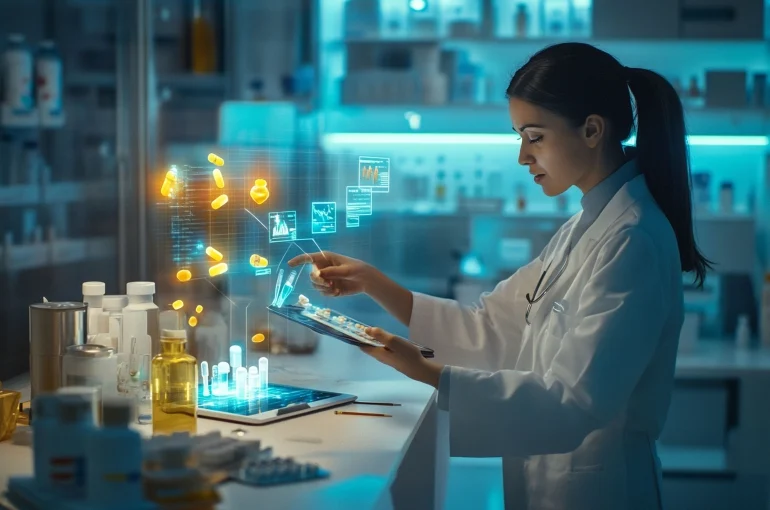
Personalized medicine is speedily growing field that are important for modifying healthcare decision of individual patient genetic information. Personalized medicine are use to identify the difference between patients whose suffer with the same disease or problem. Personalized medicine represents a change from the “one size fits all” concept. Based on “one size fits all” concept, suitable therapies must be selected for specific patients group [1]. Personalized medicine is an important approach to identify whether a particular therapy will be effective for a specific patients group or not. This concept suffers from many problems and hurdle to being productively use in healthcare department. However, it is essential to remember that personalized medicine is not a medical revolution but an evolution.
Personalized medicine concept is useful for enhancing the diagnostic accuracy to identify disease and the best therapy for patient. The treatment or therapy was selected based on the type of disease, its severity, patient age group to enhance targeted treatment that reduce the side effects, enhance patient compliance, enhance therapeutic potency, reduced the treatment cost and finally promote research and innovation [2].
Now days, personalized medicine approaches are widely used in patient care system and has steadily increased over time due to their wide advantages. Day by day newer technology is being developed which accelerated the growth of personalized medicine. However, these advance technology are built on a foundation of scientific research and medical practice that has been in place for many years. The improvement of personalized medicine technology is a continuous process that enhances the knowledge about disease therapy and patent care [3].
Currently personalized medicine approach are using across the several therapeutic areas. The FDA has approved over 300 PM, with approximately 25% of novel drugs receiving approval with biomarker data (FDA, 2022). Most of pharmaceutical companies have improved their research and development strategies by involving personalized approaches and others are in pipelines. Healthcare department also creating personalized medicine department that is helpful for newer research finding in the clinical practice [4].
Artificial intelligence and machine learning are use to modernizing personalized medicine approach that would be impossible for human to identify. Deep learning algorithms are use for prediction of drug response by using patient genetic profile with higher accuracy. Following technology are used to for improving personalized medicine approach: (a) Novel biomarkers identification to enhance treatment effectiveness; (b) Expansion of digital pathology tools for identification of small cellular changes; (c) Designing of virtual patient models to enhance the efficacy of treatment responses; (d) Evaluation of drug dosing responses for individual patients. For example diagnosis and treatment of hyper-cholesterolaemia which is a most common familial disease, where heterozygous gene mutations are expected in population. Hyper-cholesterolaemia is highly responsible for cardiovascular problems. Therefore the National Institute for Health and Care Excellence (NICE) have been recommended its risk reducing treatments in 2007. Molecular diagnosis of hyper-cholesterolaemia by genotype identification are a thrilling step for it prevention. Personalized medicine approach is not only use for treatment purpose but also use for early diagnosis of disease and its prevention [5].
The human body use the medicine or drug for the treatment of any disease is dealing with the response of body to the drug and second is interaction of drug with its target. The body response to the drug involve following steps (a) absorption; (b) distribution of drug; (c) metabolism of drug; (d) excretion of drug, these steps and collectively called ADMET or pharmacokinetic of drug molecule. These pharmacokinetic activities are also under the control of set of genes such as metabolizing enzymes that are varies in patient and influence the response of body to drug differentially.
After entering of the drug in body it interact with the target which is a gene or protein encoded by gene, this process collectively known as pharmacodynamic properties of drug molecule. Pharmacodynamic properties include affinity of the drug molecules towards its target, ability of the target to bind with drug molecules and the potency of drug to give its therapeutic action.

- Name: Dr. Shalini Bajaj
- Designation: Associate Professor
- School: School of Pharmaceutical Sciences
- University: Jaipur National University
 Back
BackRecent Post
- How to Find the Best Universities in Uttar Pradesh?
- Why Digital Marketing Is One of the Most Future-Ready MBA Specializations
- How to build the best CAT preparation strategy
- The Role of Nurses in Societal Stratification: Medicine for Life
- BBA Full Form Explained: Is This The Right Degree For You?
- BCA Full Form, Subjects, and Career Pay
- The JEE Exam Has More To It Than Just Tough Questions
- Everything About NID, The National Institute Of Design
- My First Clinical Experience: Reflection on Mistakes, Learning & Developing Competence
- From Textbooks to Heartbeats: What Students Should Not Experience
Categories
Archives
Contact Form


Copyright © 2026 Jaipur National University. All Rights Reserved.
Website Design and Development by Sterco Digitex


Browse by School
- School of Engineering & Technology
- School of Business & Management
- School of Computer & Systems Sciences
- School of Education
- School of Languages, Literature and Society
- School of Life & Basic Sciences
- School of Pharmaceutical Sciences
- School of Media Studies
- School of Fashion Design
- Seedling School of Law and Governance
- Seedling School of Nursing
- Seedling School of Allied and Healthcare Sciences
- School of Agricultural Sciences
- School of Hotel Management & Catering Technology
- Jaipur National University Institute for Medical Sciences and Research Centre