
Sustainable Agriculture
Introduction
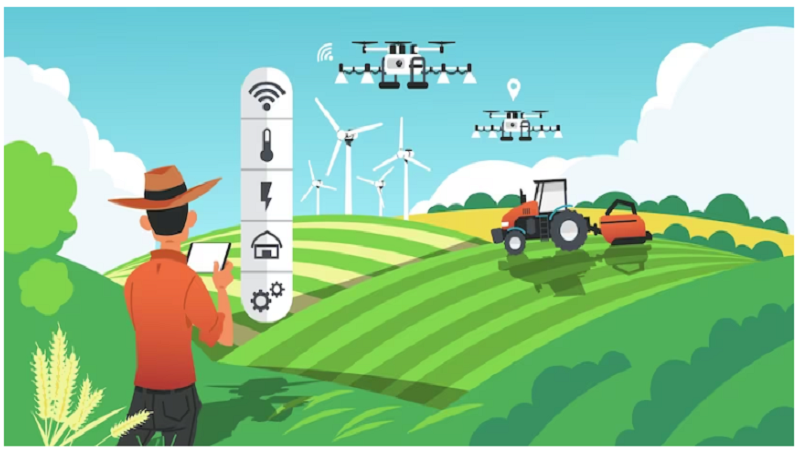
The population of India is 1.4 billion and to feed the growing population farmers are dependent on High Yielding Variety (HYV). The need for HYV(High Yielding Varieties) surpasses high dose of chemicals in the form of fertilizers, pesticides and weedicides. Those chemicals infused in our food chain and absorbed in the vitals. To overcome this treacherous issue sustainable farming is the only solution. Sustainable agriculture is farming in sustainable ways meeting society's present food and textile needs, without compromising the ability for current or future generations to meet their needs. It can be based on an understanding of ecosystem services. There are many methods to increase the sustainability of agriculture. When developing agriculture within sustainable food systems, it is important to develop flexible business process and farming practices. Agriculture has an enormous environmental footprint, playing a significant role in causing climate change (food systems are responsible for one third of the anthropogenic GHG emissions),water scarcity, water pollution, land degradation, deforestation and other processes; it is simultaneously causing environmental changes and being impacted by these changes. Sustainable agriculture consists of environment friendly methods of farming that allow the production of crops or livestock without damage to human or natural systems. It involves preventing adverse effects to soil, water, biodiversity, surrounding or downstream resources—as well as to those working or living on the farm or in neighbouring areas. Elements of sustainable agriculture can include permaculture, organic farming, agroforestry, mixed farming, multiple cropping, cover crops, urban agriculture and crop rotation.
The School of Agricultural Sciences along with the studies act in accordance with sustainable agriculture. Here in Jaipur National University, we are privileged to have sets of Sewage Treatment Plant (STP) which fulfilled the demand of irrigation water. Students are scientifically trained in vermicompost technology and biofertilizer production. Moreover,under the Rural Agricultural Work Experience Programme,students are supposed totrain the farmers of their respective villages. Thus, an ecological chain is maintained where the JNU meets the demand of the students and the students fulfil the demand of the farmers.
 Back
BackRecent Post
- How to Find the Best Universities in Uttar Pradesh?
- Why Digital Marketing Is One of the Most Future-Ready MBA Specializations
- How to build the best CAT preparation strategy
- The Role of Nurses in Societal Stratification: Medicine for Life
- BBA Full Form Explained: Is This The Right Degree For You?
- BCA Full Form, Subjects, and Career Pay
- The JEE Exam Has More To It Than Just Tough Questions
- Everything About NID, The National Institute Of Design
- My First Clinical Experience: Reflection on Mistakes, Learning & Developing Competence
- From Textbooks to Heartbeats: What Students Should Not Experience
Categories
Archives
Contact Form


Copyright © 2026 Jaipur National University. All Rights Reserved.
Website Design and Development by Sterco Digitex


Browse by School
- School of Engineering & Technology
- School of Business & Management
- School of Computer & Systems Sciences
- School of Education
- School of Languages, Literature and Society
- School of Life & Basic Sciences
- School of Pharmaceutical Sciences
- School of Media Studies
- School of Fashion Design
- Seedling School of Law and Governance
- Seedling School of Nursing
- Seedling School of Allied and Healthcare Sciences
- School of Agricultural Sciences
- School of Hotel Management & Catering Technology
- Jaipur National University Institute for Medical Sciences and Research Centre