
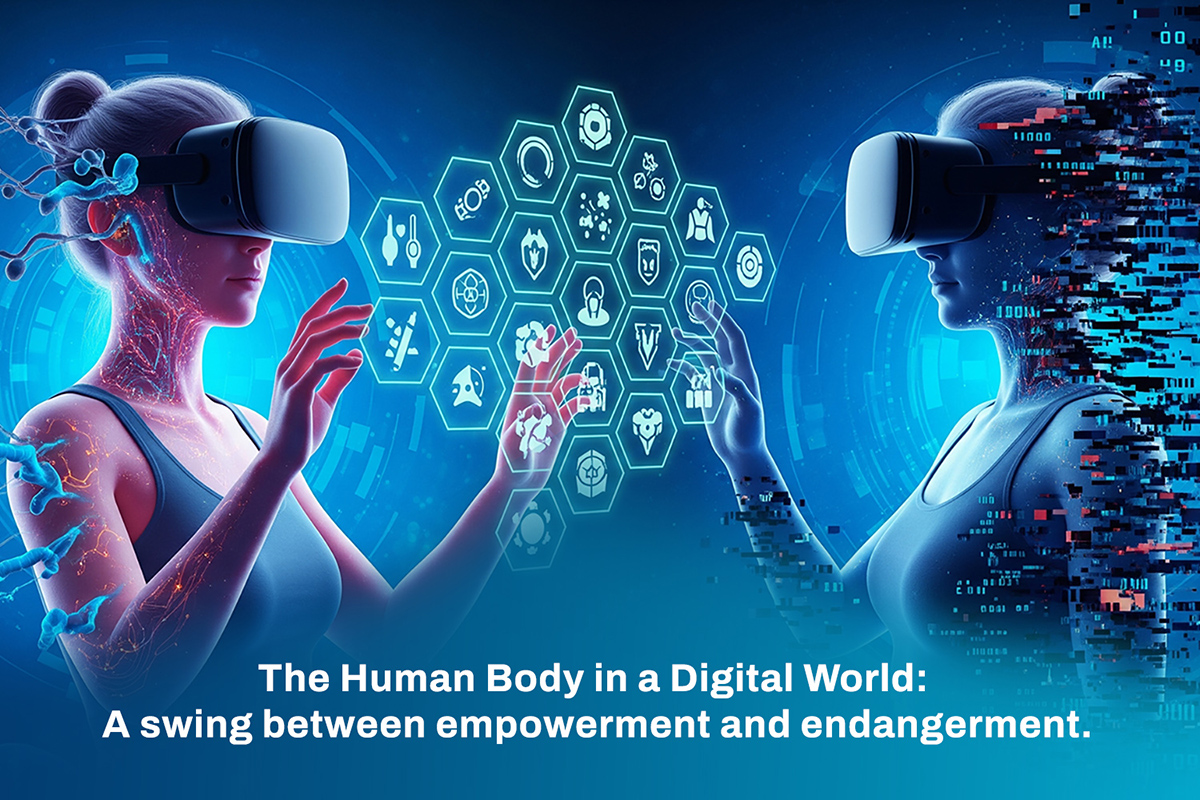
Human Body in the Digital World: A Swing Between Empowerment and Endangerment

Shubham Tanwar,
Assistance Professor,
School of Life and Basic Sciences,
Jaipur National University,
Jaipur
For many individuals, the distinction between online and offline has become so hazy that it is no longer useful or, worse, accurate. This is because Internet access has grown to the point that it is now synonymous with existence. We are fooling ourselves when we talk about being online or offline these days.
As more people want to use technology to better understand their everyday lives, the Quantified Self (QS) movement has attracted a lot of attention recently. Fundamentally, QS is the methodical gathering and examination of personal information (Self-Tracking) in order to guide choices and promote personal development.
Advantage of Quantified Self
Self-tracking has several benefits such as:
Enhanced self-awareness: People can better understand their routines, preferences, and actions by collecting data on different aspects of their lives.
Improved decision-making: Data-driven insights may help influence choices about personal finances, productivity, and health.
Better motivation: Monitoring one's progress toward objectives can increase motivation and a sense of achievement.
Disadvantage of Quantified Self
However, there are some negative aspects of self-quantification:
Data saturation: Collecting and analyzing a large amount of data may be very challenging and time-consuming.
Obsessive behavior: Too much attention on tracking may lead to the development of an unhealthy addiction with numbers and statistics.
Privacy issues: The collection and storage of personal data are at the center of security and privacy issues that cannot be neglected.
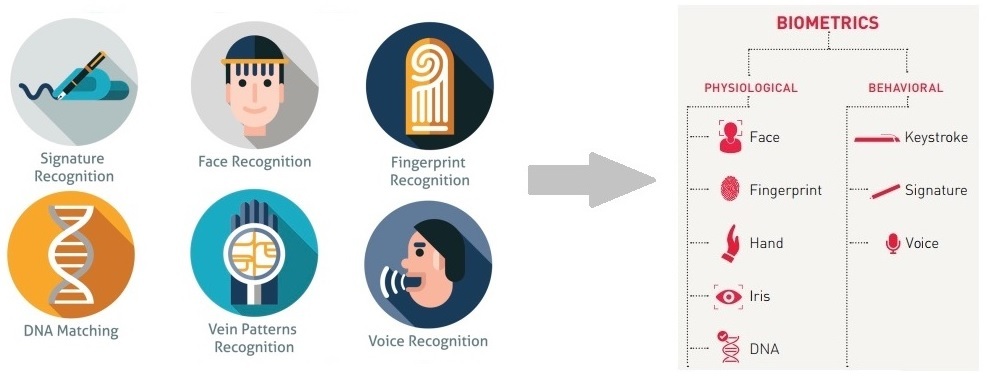
Biometric identification has become the most popular way of confirming identity in various fields, such as airport security and unlocking phones. Biometrics that are based on physical features such as voice, fingerprints, or facial recognition are a more efficient and secure option than traditional methods, such as PINs and passwords.
The cost of stolen data such as biometric data can be very high. As it can be and is used for identity theft and fraud and other criminal activity. If someone with malicious intent gain access to a database containing biometric data of large group of people, they can be uses to impersonate and gain unauthorized access to financial resources and secure locations.
Companies frequently assert that their security procedures are robust, yet a number of incidents demonstrate that inadequate security measures have led to the exposure of private biometric information. People become more skeptical about the security of their biometric information when they are not given clear information about how their data is handled.
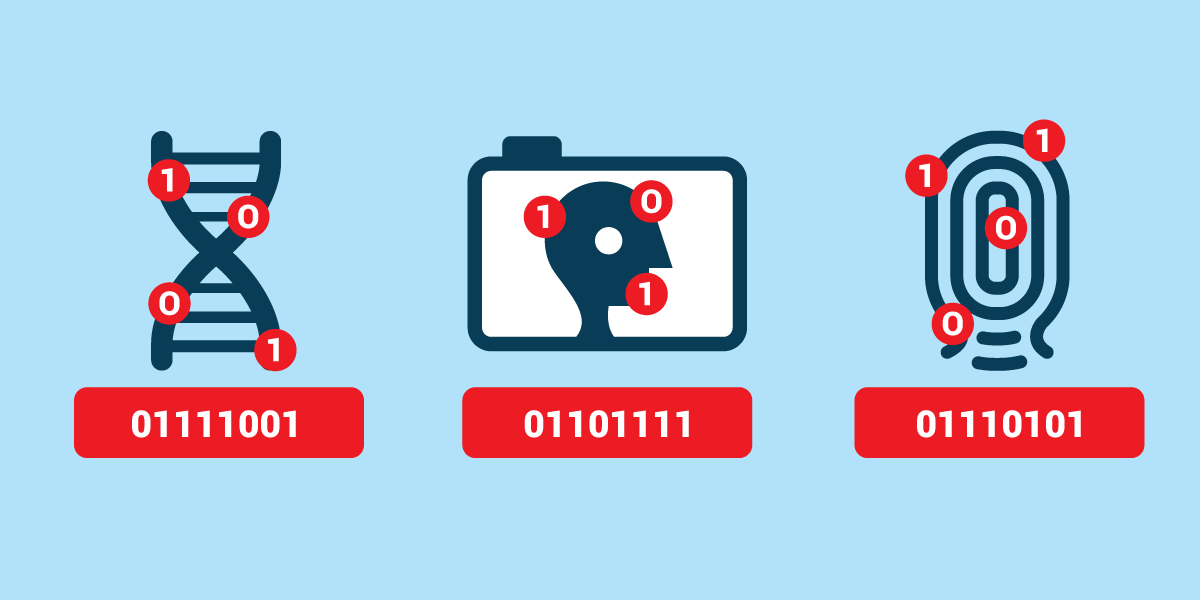
Facial recognition technology has generated controversy, because it might allow for widespread surveillance without people's awareness or agreement. The use of face recognition by governments to follow demonstrators has stifled free speech and assembly in several nations.
Furthermore, there are worries that governments or businesses can gather biometric information about people under the pretense of security and then use it to follow them around to gain more insight for consumer engagement data.
Security of the Biometric data
Organizations can take the following steps to safeguard privacy while collecting biometric data:
• Encrypt Biometric Information: Organizations should encrypt biometric information when it's being used as well as when it's at rest. Encryption guarantees that without the right decryption keys, the data will remain unreadable even if it is intercepted or compromised. This minimizes the possibility of illegal access to private biometric data.
• Create prominent Data Management Policies: It's critical to have transparent and readily apparent data management policies. Users must be informed by organizations regarding the collection, storage, and sharing of their biometric data. This transparency promotes confidence and ensures that consumers are aware of the security protocols in place to safeguard their data.
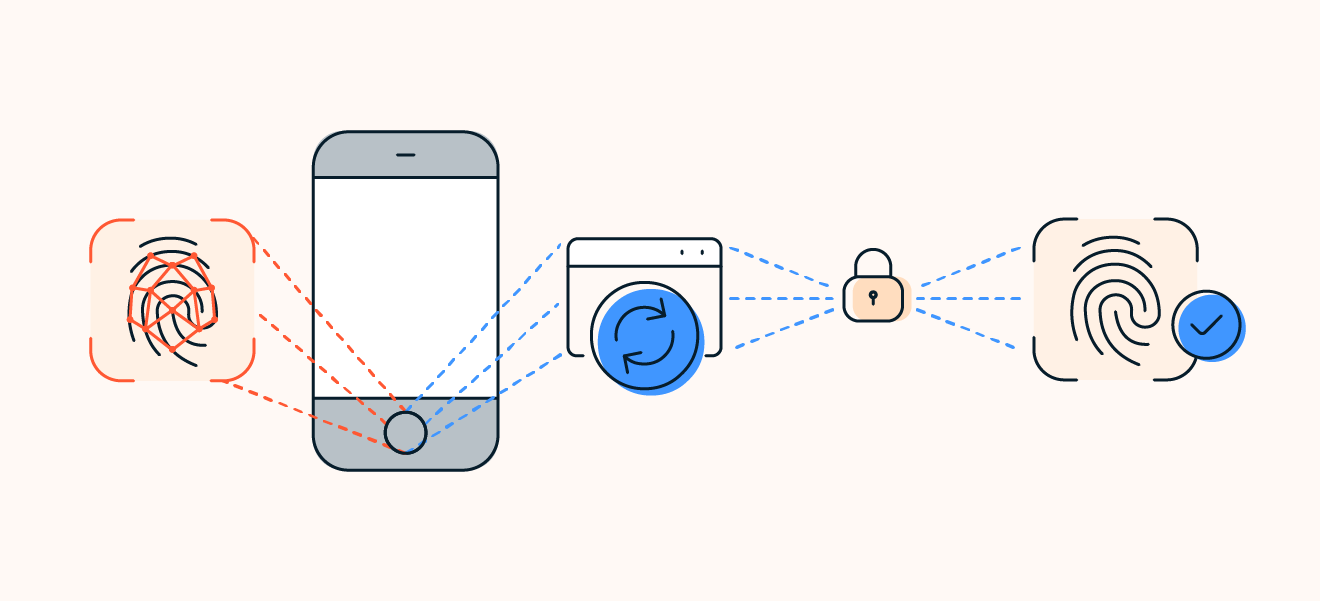
• Local processing: Local processing can be used. Biometrics should be processed locally on the user's device for enhanced privacy. This approach prevents Biometric data from being transmitted directly to the centralized system and to other server sites, which can increase the risk of getting information into the wrong hands.
• Decentralized technologies should be used. Inefficiencies ensure that the data is not kept in a central location, which reduces the chance of large-scale hacks and enhances user privacy. Decentralization provides more effective control over the use of data and its accessibility.
• Organizations should avoid long-term storage of data. The data should be discarded once it has been used for verification.
• Regular audits: Organizations should conduct regular security audits and assessments to identify vulnerabilities in their systems. Compliance with privacy regulations can be ensured with routine audits. The organization's practices align with current privacy standards, as a result of periodic reviews of their data retention policies.
It is important for organizations to balance the need for security and convenience with the responsibility of protecting users' privacy. Businesses can mitigate risks while protecting personal data by learning from past data breeches.
With regulators far behind the times and slow to adopt new policies, technology is quickly outpacing politics. Information is power. Giving personal, biological data to Global companies which are focused on profit and expecting them to handle it in a way that’s beneficial to their customers is a very big (and perhaps naive) gamble.
References
1. Ansah Technologies Blog. (2022.). The psychological effects of virtual reality . Retrieved from https://1ansah.in/blog/the-psychological-effects-of-virtual-reality/(https://1ansah.in/blog/the-psychological-effects-of-virtual-reality/)
2. Biometrics Institute. (n.d.). The complex relationship between biometrics and artificial intelligence . Retrieved from https://www.biometricsinstitute.org/the-complex-relationship-between-biometrics-and-artificial-intelligence/(https://www.biometricsinstitute.org/the-complex-relationship-between-biometrics-and-artificial-intelligence/)
3. Gong, X., Zeng, R., Zhou, D., Yu, J., & Guo, Q. (2024). Haptics-mediated virtual embodiment: Impact of a wearable avatar-controlling system with kinesthetic gloves on embodiment in VR. Frontiers in Virtual Reality . Advance online publication. https://www.frontiersin.org/journals/virtual-reality/articles/10.3389/frvir.2024.1439724/full(https://www.frontiersin.org/journals/virtual-reality/articles/10.3389/frvir.2024.1439724/full)
4. Han, Z., & Li, M. (2022). The metaverse and its influence and transformation on human society. ResearchGate . Retrieved from https://www.researchgate.net/publication/364979529_The_metaverse_and_its_influence_and_transformation_on_human_society(https://www.researchgate.net/publication/364979529_The_metaverse_and_its_influence_and_transformation_on_human_society)
5. Harvard Law School, Petrie-Flom Center. (2020) Informed consent, redefined: How AI and big data are changing the rules . Retrieved from https://petrieflom.law.harvard.edu/2025/04/11/informed-consent-redefined-how-ai-and-big-data-are-changing-the-rules/(https://petrieflom.law.harvard.edu/2025/04/11/informed-consent-redefined-how-ai-and-big-data-are-changing-the-rules/)
6. Identity.com. (2023.). Privacy concerns with biometric data collection . Retrieved from https://www.identity.com/privacy-concerns-with-biometric-data-collection/(https://www.identity.com/privacy-concerns-with-biometric-data-collection/)
7. Jurgenson, N. (2021.). Digital dualism denialism . Rough Type. Retrieved from https://www.roughtype.com/?p=2090(https://www.roughtype.com/?p=2090)
8. Kaspersky. (n.d.). What is a digital footprint? Retrieved from https://www.kaspersky.com/resource-center/definitions/what-is-a-digital-footprint(https://www.kaspersky.com/resource-center/definitions/what-is-a-digital-footprint)
9. Kim, Y., Lee, Y., & Choi, K. (2025). Gender identity and perception in virtual spaces: the impact of avatar gender transition on the ZEPETO platform. Frontiers in Virtual Reality . Advance online publication. https://www.frontiersin.org/journals/virtual-reality/articles/10.3389/frvir.2025.1505624/full(https://www.frontiersin.org/journals/virtual-reality/articles/10.3389/frvir.2025.1505624/full)
10. Matwyshyn, A. M. (2019). The Internet of Bodies. William & Mary Law Review , 61 (1), 1–77. https://scholarship.law.wm.edu/wmlr/vol61/iss1/3/(https://scholarship.law.wm.edu/wmlr/vol61/iss1/3/)
11. Moura, J. M., Silva, R., & Silva, C. (n.d.). Embodiment in Virtual Reality: The Body, Thought, Present, and Felt in the Space of Virtuality . Retrieved from https://jmartinho.net/research/embodiment-in-virtual-reality-the-body-thought-present-and-felt-in-the-space-of-virtuality/(https://jmartinho.net/research/embodiment-in-virtual-reality-the-body-thought-present-and-felt-in-the-space-of-virtuality/)
12. Number Analytics. (n.d.). The quantified self: The future of personal data . Retrieved from https://www.numberanalytics.com/blog/quantified-self-ultimate-guide(https://www.numberanalytics.com/blog/quantified-self-ultimate-guide)
13. Oziomek, A., Kujawski, R., Kaczmarek, M., Pospieszyński, M., & Sienkiewicz, M. (2024). Self-Assessed Experience of Emotional Involvement in Sensory Analysis Performed in Virtual Reality. Foods 13 (3), 375. https://www.mdpi.com/2304-8158/13/3/375(https://www.mdpi.com/2304-8158/13/3/375)
14. Paubox. (n.d.). AI in healthcare privacy: Enhancing security or introducing new risks? Retrieved from https://www.paubox.com/blog/ai-in-healthcare-privacy-enhancing-security-or-introducing-new-risks(https://www.paubox.com/blog/ai-in-healthcare-privacy-enhancing-security-or-introducing-new-risks)
15. The Philosophy of Online Manipulation . (n.d.). PhilPapers. Retrieved from https://philpapers.org/archive/JONTPO-57.pdf(https://philpapers.org/archive/JONTPO-57.pdf)
16. RAND Corporation. (2020). The Internet of Bodies will change everything, for better or worse . Retrieved from https://www.rand.org/pubs/articles/2020/the-internet-of-bodies-will-change-everything-for-better-or-worse.html(https://www.rand.org/pubs/articles/2020/the-internet-of-bodies-will-change-everything-for-better-or-worse.html)
17. Saby, A., Mistry, S., Sinyor, M., & Teeple, R. C. (2024). Effects of Embodiment in Virtual Reality for Treatment of Chronic Pain: Pilot Open-Label Study. Journal of Medical Internet Research , 26 , e55462. https://pmc.ncbi.nlm.nih.gov/articles/PMC10907942/(https://pmc.ncbi.nlm.nih.gov/articles/PMC10907942/)
18. Turkle, S. (2011). Tethering. In Alone together: Why we expect more from technology and less from each other (pp. 167-196). Basic Books. https://bpb-us-e1.wpmucdn.com/sites.mit.edu/dist/0/833/files/2020/05/ST_Tethering.pdf
(https://bpb-us-e1.wpmucdn.com/sites.mit.edu/dist/0/833/files/2020/05/ST_Tethering.pdf)
19. UN Women. (n.d.). FAQs: Digital abuse, trolling, stalking, and other forms of technology-facilitated violence against women . Retrieved from https://www.unwomen.org/en/articles/faqs/digital-abuse-trolling-stalking-and-other-forms-of-technology-facilitated-violence-against-women(https://www.unwomen.org/en/articles/faqs/digital-abuse-trolling-stalking-and-other-forms-of-technology-facilitated-violence-against-women)
20. University of Alabama News. (n.d.). Social media, mental health and body image . Retrieved from https://news.ua.edu/2025/03/social-media-mental-health-and-body-image/(https://news.ua.edu/2025/03/social-media-mental-health-and-body-image/)
Image References:
1. https://www.controleng.com/hacking-off-your-finger-how-to-protect-biometric-data-from-cybercriminals/,
URL: https://www.controleng.com/wp-content/uploads/2024/12/Cybersecurity-Thumbprint_KSN-1024x755-1-3.jpg
2. https://www.thalesgroup.com/en/markets/digital-identity-and-security/government/inspired/biometrics
URL : https://www.thalesgroup.com/sites/default/files/gemalto/what-is-biometrics.jpg
3. https://www.avast.com/c-what-is-biometric-data,
URL : https://www.avast.com/hs-fs/hubfs/New_Avast_Academy/what_is_biometric_data_and_is_it_secure_academy/biometric-data-02.png?width=1320&height=601&name=biometric-data-02.png
4. https://www.eff.org/issues/biometrics
URL : https://www.eff.org/files/banner_library/biometrics_0.png
 Back
BackRecent Post
- How to Find the Best Universities in Uttar Pradesh?
- Why Digital Marketing Is One of the Most Future-Ready MBA Specializations
- How to build the best CAT preparation strategy
- The Role of Nurses in Societal Stratification: Medicine for Life
- BBA Full Form Explained: Is This The Right Degree For You?
- BCA Full Form, Subjects, and Career Pay
- The JEE Exam Has More To It Than Just Tough Questions
- Everything About NID, The National Institute Of Design
- My First Clinical Experience: Reflection on Mistakes, Learning & Developing Competence
- From Textbooks to Heartbeats: What Students Should Not Experience
Categories
Archives
Contact Form


Copyright © 2026 Jaipur National University. All Rights Reserved.
Website Design and Development by Sterco Digitex


Browse by School
- School of Engineering & Technology
- School of Business & Management
- School of Computer & Systems Sciences
- School of Education
- School of Languages, Literature and Society
- School of Life & Basic Sciences
- School of Pharmaceutical Sciences
- School of Media Studies
- School of Fashion Design
- Seedling School of Law and Governance
- Seedling School of Nursing
- Seedling School of Allied and Healthcare Sciences
- School of Agricultural Sciences
- School of Hotel Management & Catering Technology
- Jaipur National University Institute for Medical Sciences and Research Centre