
Good Morning, Teacher: Through the Lens of Social Media for Aspiring Educators

Prof. Rita Arora,
School of Education,
Jaipur National University,
Jaipur
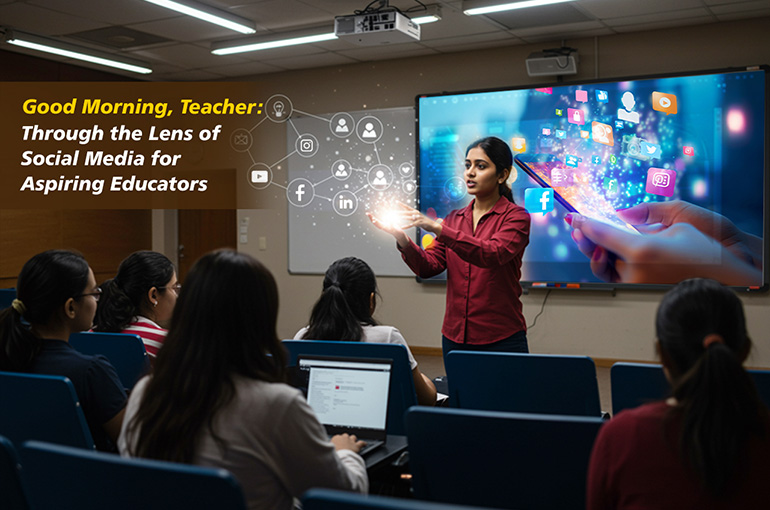
“Good Morning, Teacher” is not just a simple greeting-it’s a chance to see how social media can be a great help in a teacher’s journey. Whether you’re a future teacher or a new graduate, this blog will show you how to use online platforms to grow your professional network, improve your skills, and make a meaningful impact in education. Education leaders are key in promoting responsible digital literacy, making sure social media is used well in teaching. Knowing how to navigate this digital world helps teachers create inclusive and effective learning experiences.
In our connected world today, social media has really changed education, giving teachers amazing chances to grow, work together, and be creative.
The times when teaching was only done in classrooms are over-now, teachers can connect, share ideas, and inspire people all over the world with just a click. Aspiring educators can harness social media for various purposes, including professional networking, pedagogical development, and student engagement.
Earlier, teachers relied on conferences and formal training for career development. However, social media now offers immediate access to expert discussions, mentorship, and collaboration.
• Twitter & LinkedIn: Teachers use Twitter hashtags such as #EduTwitter to engage with educators worldwide. LinkedIn provides professional connections, research materials, and job opportunities.• Facebook Groups & Forums: These allow educators to exchange ideas, lesson plans, and classroom management tips in real time.
• YouTube & Podcasts: Channels dedicated to education provide tutorials and insights into innovative teaching methods.
• Instagram & TikTok: Short videos demonstrating engaging classroom activities have become popular among teachers.
• Blogs & Medium Articles: Educators write about their experiences, offering a firsthand account of what works in the classroom.
• Live Sessions & Webinars: Platforms like Facebook Live allow educators to conduct virtual lessons.
• Collaborative Projects: Students can collaborate online with peers from different regions.
• Digital Storytelling: Platforms such as TikTok enable students to present research findings creatively.
For instance, a science teacher may use visuals to explain complex concepts, ensuring students grasp them effectively.
While social media offers immense benefits in education, it also comes with challenges and ethical concerns that educators must handle carefully.
Teachers need to be careful about what they post online because everything they say and do adds to their digital footprint. A thoughtless comment or a heated discussion can harm their professional image and job opportunities later on.
Future teachers need to carefully check their sources before using any shared methods or teaching tips. Misinformation—whether it's about teaching methods, school rules, or how to engage students—can cause wrong choices in the classroom.
Teachers should create limits to make sure they balance their professional learning with offline activities, like reading academic journals, going to conferences, or joining in-person discussions our wellbeing.
For teachers using social media in their classrooms, it's really important to stay professional. The platforms used for learning need to be watched closely to make sure that discussions are appropriate and helpful, without any cyberbullying or bad influences.
Teachers need to know about cybersecurity dangers like hacking, phishing, and data breaches. Schools should offer training on how to stay safe online, highlighting how crucial it is to protect personal and work accounts from cyber threats.
Not every student or teacher has the same access to digital tools and social media. Money issues can make it hard for some people to join online learning groups, which makes it tough to be inclusive. Aspiring educators need to push for rules that help everyone get equal access to technology, so that no student gets left out because of a lack of resources.
Aspiring educators be supported and involved in Professional Learning Networks. PLNs give teachers chances to connect, share good practices, and find mentors—both online and face-to-face. Organized online chats, virtual mentorship programs, and group learning spaces allow teachers to tailor their professional development, stay informed about trends, and tackle real-time problems with peers from across the country. PLNs are a “gamechanger” for getting support and building connections with other school leaders.
Directors need to make sure that teachers have the skills to use social media and digital tools in a responsible way. Workshops that focus on social media ethics, digital citizenship, and how to evaluate content can help teachers use these platforms professionally and show students how to behave online. This training is crucial for teachers to help students use technology ethically and understand the importance of digital manners and critical thinking online. Digital literacy training also helps teachers identify trustworthy information and teach these skills to their students.
Aspiring educators be trained to use of digital tools, making sure they support rather than replace traditional teaching methods and promoting sustainability.
Social media is revolutionizing education, offering aspiring educators new opportunities for collaboration, innovation, and professional growth. When used responsibly, it fosters inclusivity, creativity, and engagement; ultimately shaping a more connected and informed teaching community. For education directors, supporting educators in leveraging social media ethically and effectively will contribute to meaningful educational progress. By embracing digital tools while maintaining professional integrity, educators can create inspiring and impactful learning experiences.
References:
1. Ansari, J. A. N., & Khan, N. A. (2020). Exploring the role of social media in collaborative learning the new domain of learning. Smart Learning Environments, 7(1), 1-16.
2. Carpenter, J. P., & Krutka, D. G. (2019). Social media and professional development: A systematic review. Research in Social Sciences and Technology, 4(1), 1-22.
3. Greenhow, C., & Chapman, A. (2023). The benefits and pitfalls of social media for teachers' agency and wellbeing. Technology, Pedagogy and Education, 32(2), 185-202.
4. Sprout Social. (2023). The 2023 sprout social index: Above & beyond. https://sproutsocial.com/insights/data/index/
5. Trust, T. (2017). "Together we are better": Professional learning networks for teachers. Computers & Education, 114, 49-66. https://doi.org/10.1016/j.compedu.2017.06.016
 Back
BackRecent Post
- How to Find the Best Universities in Uttar Pradesh?
- Why Digital Marketing Is One of the Most Future-Ready MBA Specializations
- How to build the best CAT preparation strategy
- The Role of Nurses in Societal Stratification: Medicine for Life
- BBA Full Form Explained: Is This The Right Degree For You?
- BCA Full Form, Subjects, and Career Pay
- The JEE Exam Has More To It Than Just Tough Questions
- Everything About NID, The National Institute Of Design
- My First Clinical Experience: Reflection on Mistakes, Learning & Developing Competence
- From Textbooks to Heartbeats: What Students Should Not Experience
Categories
Archives
Contact Form


Copyright © 2026 Jaipur National University. All Rights Reserved.
Website Design and Development by Sterco Digitex


Browse by School
- School of Engineering & Technology
- School of Business & Management
- School of Computer & Systems Sciences
- School of Education
- School of Languages, Literature and Society
- School of Life & Basic Sciences
- School of Pharmaceutical Sciences
- School of Media Studies
- School of Fashion Design
- Seedling School of Law and Governance
- Seedling School of Nursing
- Seedling School of Allied and Healthcare Sciences
- School of Agricultural Sciences
- School of Hotel Management & Catering Technology
- Jaipur National University Institute for Medical Sciences and Research Centre