
Age of Surveillance and Survival: Digital Life Under Lock
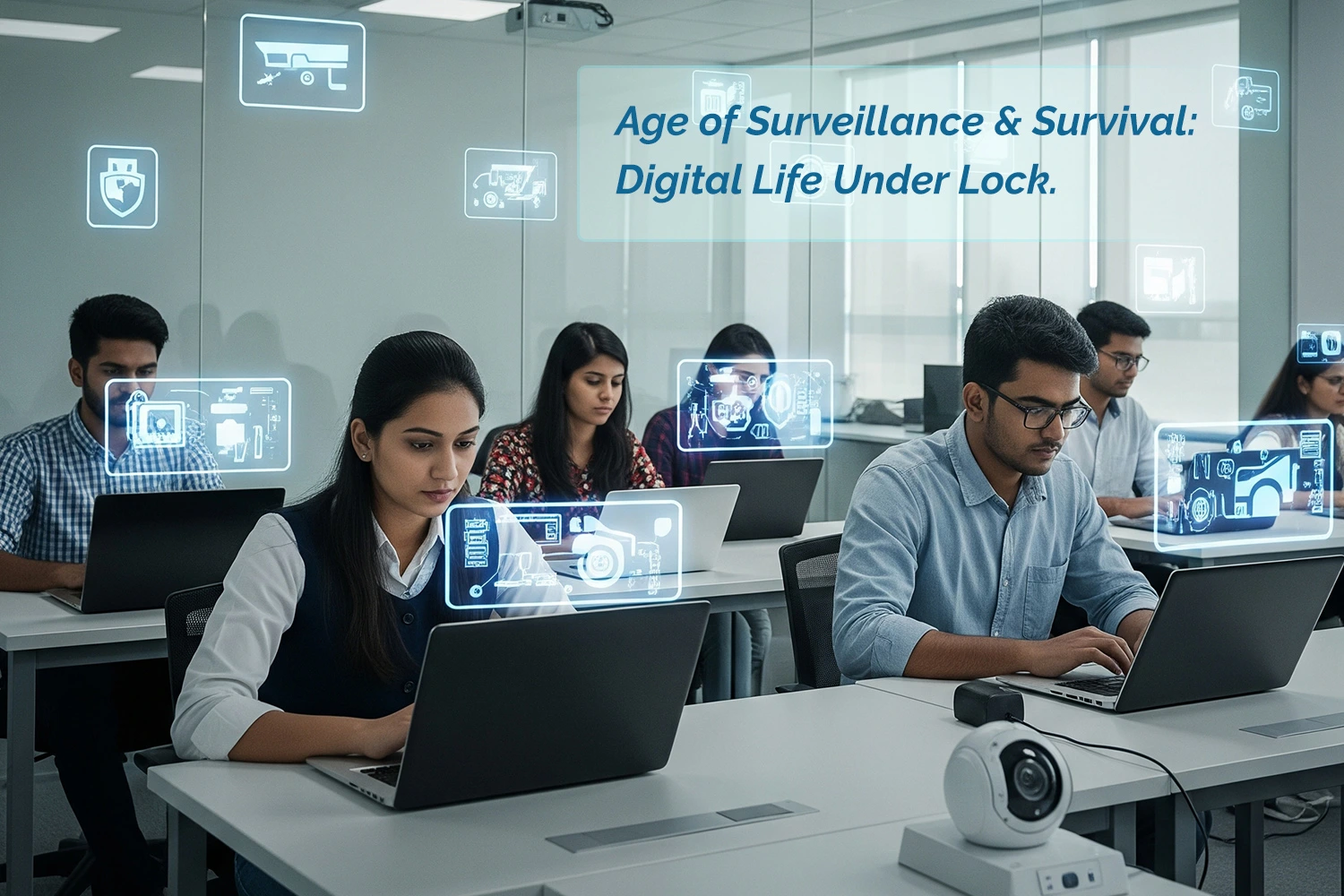
We use the internet every day, and everything we do there leaves a mark. From searching Google to posting a photo, we are always being watched. This is the age of surveillance.
Your Data Is Everywhere
We share information when we use our phones or go online, often without realizing it. We allow apps to know our location. We let websites track our behaviour. Even our voices and faces can be recorded. That data doesn’t just disappear. It gets stored, studied, and sold.
Big Companies Are Watching
Many tech companies collect huge amounts of data. They say it helps improve their services. But often, it’s used for profit. Your likes, clicks, and purchases help create a digital profile of you.
This profile tells others who you are, what you like, and what you might buy. Ads are then targeted based on that. It may seem helpful, but it also means companies know more about you than you think.
The truth is simple: if a service is free, you are likely the product.
Governments Are Watching Too
It’s not just companies. Governments also watch people. They say it's for safety and security. In some places, this has gone very far. Some countries have cameras almost everywhere. They use facial recognition and AI to follow people. Some even score their citizens based on behavior.
In other places, the rules are not as strict. But even in democracies, the government often collects data without asking. Emails, messages, and phone calls can all be monitored.
This raises big questions: How much privacy do we really have?
Living Under a Digital Lock
We live under a kind of lock—an invisible one. It doesn’t feel like being locked up, but it still affects how we live. When we know someone is watching, we act differently. We think twice before we post or search. We act more carefully.
This is called the "chilling effect." It can silence people. It can stop free thought and speech. In the past, privacy meant closing your door. Today, it means protecting your data. That’s not easy.
Can We Escape the Watchers?
It's hard to avoid being tracked. But we can reduce it. Here are a few simple steps:
- Use private browsers like Firefox or Brave.
- Try search engines like DuckDuckGo.
- Use messaging apps like Signal.
- Turn off location sharing when not needed.
- Delete apps you don’t use.
- Use strong passwords and two-factor security.
- Avoid logging in to every site using your social media account.
These won’t stop all tracking. But they help protect your digital life.
Technology Is Not the Enemy
Not all surveillance is bad. Cameras can stop crime. Data can help during health crises. But we need balance. We must ask: who is watching? Why? And what are they doing with the data?
There should be clear rules. There should be limits. Most importantly, people should know if and how they are being watched. But sadly, that doesn’t always happen.
Fighting Back Together
They push for better laws. They fight against spying. They teach people how to stay safe online.
We can help too. We can support these groups. We can speak out when we see abuse. We can ask companies to do better. We can vote for leaders who care about privacy.
What’s at Risk?
Without action, we may lose more than just privacy. We may lose freedom. If every move is tracked, true freedom cannot exist. People need space to think, speak, and explore without fear.
A world of total surveillance is not safe. It is silent. It is controlled. And it is dangerous.
Conclusion: A Digital Future Worth Fighting For
We don’t have to accept this as normal. We can change the future. We can make technology work for us, not against us.
It starts with small steps. Be aware. Stay informed. Protect your data. Support the right causes.
Today, staying safe online means more than just keeping quiet. It means standing up. It means speaking out. And most of all, it means caring enough to act.
Let’s fight for a digital world where privacy still matters.
 Back
BackRecent Post
- How to Find the Best Universities in Uttar Pradesh?
- Why Digital Marketing Is One of the Most Future-Ready MBA Specializations
- How to build the best CAT preparation strategy
- The Role of Nurses in Societal Stratification: Medicine for Life
- BBA Full Form Explained: Is This The Right Degree For You?
- BCA Full Form, Subjects, and Career Pay
- The JEE Exam Has More To It Than Just Tough Questions
- Everything About NID, The National Institute Of Design
- My First Clinical Experience: Reflection on Mistakes, Learning & Developing Competence
- From Textbooks to Heartbeats: What Students Should Not Experience
Categories
Archives
Contact Form


Copyright © 2026 Jaipur National University. All Rights Reserved.
Website Design and Development by Sterco Digitex


Browse by School
- School of Engineering & Technology
- School of Business & Management
- School of Computer & Systems Sciences
- School of Education
- School of Languages, Literature and Society
- School of Life & Basic Sciences
- School of Pharmaceutical Sciences
- School of Media Studies
- School of Fashion Design
- Seedling School of Law and Governance
- Seedling School of Nursing
- Seedling School of Allied and Healthcare Sciences
- School of Agricultural Sciences
- School of Hotel Management & Catering Technology
- Jaipur National University Institute for Medical Sciences and Research Centre